
This page may contain affiliate links, which means we may earn a small commission if you make a purchase through them, at no additional cost to you.
Episode Summary
On this episode of TBG 2026, Dr. Jennifer Lincoln joins Dr. Robin Elise Weiss and Dr. Hillary Melchiors for a conversation birth professionals rarely get to hear, one that cuts through opinion and sees the daily realities of supporting birthing people from every angle. Dr. Lincoln is not only an OB hospitalist and IBCLC, but someone who’s spent years pushing for evidence-based care and bridging the gaps between hospital, home, and birth center realities. Together, we talk about how hospitalist care is reshaping outcomes and options, the messy politics of maternity deserts, what really shifts birthworker-provider collaboration, and, yes, the burnout and frustrations that come with seeing the same problems decade after decade.
We get into everything from transfer protocols and the myth of “allowed” vs. evidence-based, to the hard truths around obstetric violence and the historic lack of continuity for rural families. There’s no hand-holding for new doulas here. The conversation is for the birth professional who’s seen the gaps themselves and needs practical ways to address them, not opinions masquerading as advice. If you’re tired of podcasts that either gloss over the challenges or treat birthwork like a startup pitch, this episode will feel like a breath of fresh air.
Listen to This Episode
Guest Biography & Connection
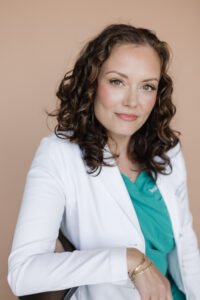
Dr. Jennifer Lincoln is an OB-GYN hospitalist, IBCLC, and bestselling author whose career sits at an unusual intersection: she practices medicine from inside the hospital 24/7, writes books and creates social media content designed to arm birthing people with real information, and talks openly about how obstetric culture needs to change. This episode covers a lot of ground, but it is anchored by a question that should matter to every birth professional in the room: what does it actually look like when providers and doulas work together well, and what gets in the way?
The hospitalist model itself is worth understanding. Dr. Lincoln explains that OB hospitalists are physically present on labor and delivery around the clock, which changes what is possible for transfers, for VBACs, for anyone who walks through the door without their own provider. Robin and Hillary bring their own on-the-ground perspective on what that shift has meant for clients in places like Louisville and Southern Indiana, and the conversation moves into the reality of geographic inequity in maternity care, including maternity care deserts, the politics of CPM licensure, and why zip code still predicts birth outcomes in ways that should not be acceptable to anyone working in this field.
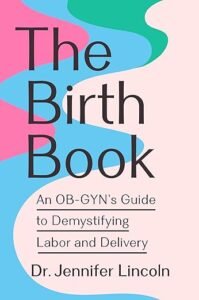
Dr. Lincoln’s new book, The Birth Book, aimed at birthing people but deliberately written to challenge providers too, threads through the conversation. So does her work on misinformation, obstetric violence, informed consent, and what a well-prepared patient actually looks like from the hospitalist’s chair. She does not pull punches on the state of American maternity care. And her practical advice for doulas, including how to introduce yourself at 3 AM during a transfer and when and how to provide feedback when something goes sideways, is the kind of thing you do not hear in most conversations about the provider-doula relationship.
Episode Time Stamps
00:00 “OB-GYN Hospitalists Explained”
06:06 “Quick Connections in Obstetrics”
07:14 Free Doula Support for Mothers
10:22 “Effective Communication in Healthcare”
13:46 “Teamwork in Doula Care”
17:59 Birth Experience and Support Impact
21:33 “Rethinking Birth Practices”
25:33 “Advocacy, Obstetrics, and Inequities”
29:36 “Awareness During C-Sections”
32:39 Prenatal Education and Labor Resources
35:12 “Choosing Safe Birth Options”
39:48 “Preparing for Hospital Birth Transfers”
43:42 “Preparing Patients for Birth”
44:45 Induction Process: Lack of Guidance
48:14 Extremes in Birth Narratives
54:30 Empowering Birth Through Respect
Key Takeaways
The hospitalist model changes what is possible for your clients, and birth professionals should understand it.
OB hospitalists are physically present on labor and delivery 24/7. That changes the VBAC conversation, the transfer conversation, and the emergency response conversation. If you are not sure how your hospital is staffed or what a hospitalist does and does not have authority over, find out. It directly affects what options you can help clients explore and how you frame that conversation in prenatal visits.
Introducing yourself with confidence at a transfer matters more than you think.
Dr. Lincoln is explicit: she wants doulas to walk up, introduce themselves by name, and ideally wear a name badge, because at 3 AM when she is taking in a transfer and trying to hold six pieces of information at once, a name makes you a team member instead of an unknown variable in the room. Projecting confidence is not about ego. It is about communicating that you belong there and that you can be useful.
A well-prepared client has thought about what happens if the plan changes.
Dr. Lincoln makes the case that the most valuable thing a doula can do in prenatal work is help a client think through the transfer scenario, the cesarean scenario, the induction scenario, before any of those things become the reality. Not to scare them. To prepare them. A client who has heard the terms, thought through game plans, and knows what questions to ask is a fundamentally different client than one who hits the hospital door having never considered that their birth center plan might not carry forward.
Obstetric violence is a precise term and abandoning it costs something real.
There was a deliberate effort in one opinion piece to retire the term obstetric violence on the grounds that it is inflammatory. Dr. Lincoln and Hillary both push back on that, and it is worth being clear on why. Language that makes people stop and recognize that something is happening is language that serves patients. Softening the framing to protect provider comfort is not neutral. Birth professionals have standing to hold that line in how they discuss these situations with clients and colleagues.
Social media gives you a window into what your clients believe before they walk in the door.
Dr. Lincoln describes actively watching TikTok and Instagram not because she enjoys it but because she wants to know what misinformation her patients have encountered. Birth professionals can use the same strategy. Asking a client what they have seen that worries them is both a clinical intake strategy and a relationship-building move. The conversation about what the evidence actually shows is more productive after you know what you are countering.
The data on American maternity outcomes is not a talking point. It is the floor of the argument for change.
Dr. Lincoln lays it out plainly: worst morbidity and mortality, highest costs, least return. The denominator problem she names is real. We are evolutionarily wired to remember the scary outlier stories and filter out the unremarkable middles, which means birth professionals have active work to do in helping clients reason about risk accurately. It also means the case for structural change in how birth is done in this country is not opinion. It is math.
Doulas are already doing advocacy work. Naming it as such changes how you show up.
Dr. Lincoln presented stories to the UN Human Rights Committee after Roe fell. She makes the point that stories are what move rooms full of policymakers, and doulas are holders of stories. That is not a small thing. Understanding that your presence in birth rooms, your documentation practices, and the cases you carry forward into policy conversations are acts of advocacy shifts the frame on what this work is and why staying in it matters.
When appropriate
Mentioned in This Episode
The Birth Book by Dr. Jennifer Lincoln (Amazon Affiliate link)
Read the Full Transcript
Note: This transcript is auto-generated and may contain minor errors. Please refer to the audio for precise language, especially around clinical terms and data. And yes, sometimes “doula” gets interpreted… creatively.
Dr Jennifer Lincoln [00:00:02]:
Thank you.Dr. Robin Elise Weiss [00:00:05]:
There we go. All right. Hello, Hillary, and hello, Dr. Jennifer Lincoln. Thank you for joining us here today.Dr Jennifer Lincoln [00:00:10]:
Thanks for having me. I'm so excited to chat.Dr. Robin Elise Weiss [00:00:13]:
I am excited too. Um, I will say, right, that Hillary and I are both fangirling. We love, love, love your content because it so aligns with so many of the things that we spend so much of our time trying to say to the clients that we have as well as the doulas that we trained. But one of the really interesting things that I wanted to start off with, because I think that this is something that not everybody— and Hillary and I were talking about this a couple minutes ago— not everybody is familiar with the concept of a hospitalist or an OB hospitalist. I know you're also an IBCLC and a 2-time book author. You got a new book coming out. But I would love to talk a little bit about, you know, how all of this fits together because I don't think it was an accident.Dr Jennifer Lincoln [00:01:07]:
Yeah. Well, some days I'm like, what am I doing? This is a lot. But I am so thankful to be here and to talk with you all. And I love anchoring this, you know, and kind of what is a hospitalist. And then I feel like everything fits into that. And also because I just got off of my Society of OB-GYN Hospitalists board meeting. So we're just continuing, we're just continuing the talk. So it's perfect.Dr Jennifer Lincoln [00:01:30]:
So yeah, OB-GYN hospitalists, I say it's a newer way of practicing obstetrics and gynecology, but I'm going to probably stop saying that pretty soon because I, you know, we've been doing it, I'd say, a little more formally for over a decade now. So it's not like it just came up, you know, last week. But we are OB-GYNs who care for hospitalized patients only. So we are physically present on the hospital 24/7. And you can do both obstetrics and gynecology or like I do, you're only doing obstetrics because my labor unit is so busy that that keeps me busy enough. So that means that I'm the person who's there all the time. Not me, but one of my partners, um, and we, you know, every program and how it's done is a little bit different. But at mine, we are the doctors for anybody who comes in who doesn't have a provider or they're not at our hospital.Dr Jennifer Lincoln [00:02:17]:
So transfers, or if somebody doesn't have care, or home birth or birth center transfers, we also help out the private practice docs. So if there's any emergency, we're always called to that. We run those simulations, we help to roll out new products. So we're kind of seen as like the unit experts in that regard. And we are the person who's there if that private doc is in clinic and the, you know, the baby just doesn't want to wait.Dr. Robin Elise Weiss [00:02:41]:
Baby's not waiting. Exactly.Dr Jennifer Lincoln [00:02:43]:
That's when I get to be a midwife, which is super fun. And then the other end of the spectrum is when there's, you know, the absolute emergency. That's the other part of the day. So no two days are alike, but I love it. And the benefit as a provider is that we go in, we do our shift, shifts. It could be absolutely crazy, but then we go home and we don't have a pager, we're not on call. So from a work-life balance lifestyle, it's really nice. But it's also really nice because we're getting more data to show that when you have a hospitalist present on labor and delivery, you have better outcomes, less malpractice, and patients are safer and satisfaction is higher, which I think is great.Dr Jennifer Lincoln [00:03:18]:
And the other stuff that I do, kind of in the perf— you know, the other things, the IBCLC, I got that after I had my first baby. And delivered in Portland, Oregon, where I currently am, where breastfeeding rates are, are really great. And then I went to practice on the East Coast and it was my first attending job. You know, I had this new baby, I was trying to help patients and nobody was breastfeeding. I didn't know what was going on, not realizing it was a very regional thing. And then I realized I didn't have as much help as I needed, so I needed to be the help. And we weren't taught enough in residency. So, so then I went down that pathway.Dr Jennifer Lincoln [00:03:48]:
Yeah. And then I wrote some books, social media, you know, just kind of all just fits together. But what's nice about it is that we get to use our brains in different ways and help people in different ways. And yeah, I don't think I could practice medicine in any different way.Dr. Robin Elise Weiss [00:04:02]:
I really love the concept of a hospitalist. And I will tell you, I live in Louisville, Kentucky, and we have had an OB hospitalist for many, many years. And as a doula, one of the first ways that I thought of this, and I thought of it as a really amazing thing. My first thought was, you know, one of the things that my clients and potential clients kept hearing was you can't try VBAC because I don't want to be in the hospital 24/7. And so I was like, ah, but wait, if there's an OB hospitalist in the building, right? Exactly. Did that switch everything and now everything's lovely? No, but it is certainly a counterpoint to someone's argument. You know, if I have somebody, so that's one of the things that, that I really I really appreciated was that it gave my clients more options because there was that safer, that provider there. And I will tell you, the number of times I've been at a birth where it's like, we've been there a while, but the baby is coming now.Dr. Robin Elise Weiss [00:05:03]:
And what do they do? They call the ER doc who still thinks 4th-degree episiotomies are the standard of care.Dr Jennifer Lincoln [00:05:09]:
And I'm like, oh, and trust me, that ER doc does not want to be there.Dr. Robin Elise Weiss [00:05:14]:
I know.Dr Jennifer Lincoln [00:05:15]:
Gunshot wounds, strokes, those are all fine to them, which makes me want to pass out. But when that pregnant person rolls in, they're like, call a code.Dr. Robin Elise Weiss [00:05:24]:
We can't handle that. And I appreciate that. Right.Dr Jennifer Lincoln [00:05:27]:
We all have our roles. We all know where we belong.Dr. Robin Elise Weiss [00:05:31]:
So that was actually my big thing with hospitalist was I was like, oh, okay, good. This is going to give my clients some more choice. So I want to ask you specifically, what do you think? How do you think being a hospitalist— tell me a little bit about working with doulas. And how it changes that continuity. Like, does that affect your role? Do you like— tell me a little bit about how that works for you.Dr Jennifer Lincoln [00:06:06]:
Yeah, well, the truth is, right, that I often— I don't meet people till they come in and they have no pants on. Like, and I will very much say to people, I'm like, it's kind of weird that we're meeting like this, right? Like, you know, and we'll laugh about it. But it's not like I've had 40 weeks or something to meet somebody. And so While that might stress some people out, I think those of us that go into this kind of obstetric practice, I think we're really good at finding a connection really quickly, whether it's a really fun one, like you came in and your baby's coming out so quickly and your midwife can't get there, or a really traumatic one. But even those really fun ones can still feel traumatic 'cause it feels out of control. So I think that we really do a good job of connecting quickly, communicating, and we have, you know, getting a lot of patients who transfer in from home or from a birth center. They're often coming with their doula Sometimes their midwife will come and stay, which I love, but when they've got that doula, I mean, we rely on, like, 'cause I'm looking, you know, when she's mid-contraction or she's transition or whatever, she's been pushing for 4 hours and that's why she came in, I'm gonna say, "Hi, who else would like to fill in the gaps here?" 'Cause I'm not about to bother her. And just to feel like you've got this other team member there, I think is huge.Dr Jennifer Lincoln [00:07:14]:
And one thing that I really like about our hospital is we have a doula program where our, if you're on Medicaid and live within a certain county, you will have a doula provided free of charge, not just in the hospital, but, but before and after as well. But we've— these— there are these amazing doulas who've gotten their ID badge from the hospital, so they're integrated in our system, but they're still independent. And we've had people who will come in, even if this person, you know, walked in, has nobody, on a moment's notice. And I— you just— they're there because they want to help. And so, I mean, I'm sure you guys have heard, and maybe we'll talk about like the rap that doulas get sometimes. And are there people who Aren't great in every field, yes. But the vast majority of the time, why would you not want somebody else there who can be helpful and get us to the finish line that we want to be? When I'm pulled another, I might be there in that labor, but I've got to run to the OR or there's lots of things. So we need all the support we can get.Dr Jennifer Lincoln [00:08:09]:
And we know the data backs it up. We know it works. And I love that we have dogs and cats. I feel kind of left out because I don't have an animal. I need an animal.Dr. Hillary Melchiors [00:08:19]:
Clearly, we're at home.Dr. Robin Elise Weiss [00:08:22]:
Sorry.Dr. Hillary Melchiors [00:08:22]:
Sorry, there must be delivery trucks. Sorry.Dr Jennifer Lincoln [00:08:25]:
Yes. No, I love it.Dr. Hillary Melchiors [00:08:27]:
And I assume you saw the, the recent case in Georgia where they kicked the doula out that just happened.Dr Jennifer Lincoln [00:08:33]:
So I saw just part of— it's been a wild week on the internet. Can we just have a moment? Like, just— I've been watching— yes, it has been a very wild— like, I literally have just been purposely watching cat and dog videos, um, and trying to cleanse my, my For You page. But I did see one video where— and I haven't watched the whole thing, but my understanding is Right, a doula was kicked out. I don't know the situation around it.Dr. Robin Elise Weiss [00:08:56]:
Do you—Dr. Hillary Melchiors [00:08:56]:
out, actually.Dr Jennifer Lincoln [00:08:57]:
Oh, that's dramatic.Dr. Hillary Melchiors [00:08:59]:
Yeah.Dr. Robin Elise Weiss [00:09:00]:
Why?Dr Jennifer Lincoln [00:09:00]:
Okay, um, it's new.Dr. Hillary Melchiors [00:09:02]:
Well, we don't have all the information.Dr. Robin Elise Weiss [00:09:04]:
Yeah, we don't.Dr. Hillary Melchiors [00:09:05]:
I don't want to just— I just know that is interesting. I want to know more.Dr Jennifer Lincoln [00:09:10]:
Yeah, I would enjoy some more facts about that. Yeah, thank you. The facts.Dr. Hillary Melchiors [00:09:15]:
Okay, so Rewinding a little bit, I know you got your IBCLC, um, and a lot of people in our audience either are IBCLCs or are doulas who have their CLC and want to work toward or work closely, very closely with IBCLC. So what changed did you see in yourself and how you practice when you added that lens to what you do?Dr Jennifer Lincoln [00:09:40]:
Oh, you know what I liked about it is I just, I remember I didn't have to do the Well, we'll just call the lactation consultant and she'll come. You know, when you're like, you're running out the door. And it doesn't mean that we still didn't use them because when I was at work, you know, and I'm wearing my OB hat, it doesn't mean I always have time. But just to have the language to start the conversations, I think is huge. And what I love is I'm seeing so many other physicians who are getting this as well. And this is real and it sucks. But we have data to show that when something comes out of a mouth of somebody who's a physician, patients are more likely to believe it and people are more likely to listen rather than it be, somebody else. And I'm not saying that's right, but I'm saying if we do this and we can use that for good.Dr Jennifer Lincoln [00:10:22]:
And so I can say to radiology or anesthesia, you know, yeah, actually we can do this or, you know, no, whatever. I can't think of any specific ones because again, I work in a very— I work great with breastfeeding and managing stuff. But, but, you know, when I was on the East Coast, it held more water, which pissed me off. I'm like, guys, I've been doing this for 10 seconds and yet there's people here for 30 years. But the reason you trust But I'm seeing more people who are doing it and can then advocate for change because you've got that liaison, those connections. And so I think that's a good thing. But that, and then also just doing it myself, and I stopped saying the stupid things like, you know, "It's natural." So are hurricanes. Like, it doesn't mean that— or, you know, "Walking is natural too, but you didn't know how to do that." So I just think it helps in knowing how to talk to people and talk people off an edge.Dr Jennifer Lincoln [00:11:15]:
And then also know like, hey, actually formula here or donor milk, like you could preserve your breastfeeding relationship and let's talk about it. And how do we do this in a way that, you know, that achieves your goals? So yeah, it's been, it's been interesting.Dr. Robin Elise Weiss [00:11:28]:
Nice.Dr. Hillary Melchiors [00:11:28]:
Well, I imagine that's a lot of pressure on physicians who already have a lot of pressure to like, oh, by the way, I had 3 more expertise just because people listen to you.Dr Jennifer Lincoln [00:11:36]:
Yeah, that's really challenging.Dr. Robin Elise Weiss [00:11:39]:
But also because there's just and So I did a very small study, um, locally where we looked at a clinic and we looked at the inform— like we gave a basic lactation quiz to all the staff, like from our CNAs all the way up to our MDs. And we separated out peds and OB and like, and then we asked the patients of the clinic, like, where do you get, like, who do you guys getting that info from? And they wanted it from their doctors, but guess who did worse on the quiz? Right, exactly, exactly.Dr Jennifer Lincoln [00:12:12]:
And you can't— and that's the perception we need to change. And it's not, you know, yes, should doctors have a basic level? Absolutely. You should not just say, I don't have to know anything. And you should also know where to get the information, or, you know, and be able to also tell patients like, hey, this is actually the best person for this job, you know, just that level of respect. And, um, rather than throwing, you know, the lactation consultant under the bus or whatever, like Can we all just— it's a team sport. And this is why, you know, it can't just be an OB or a midwife or a doula. Like, we're all better than the sum of our parts and we all have a role to play. But a lot of patients don't know, like, who is the expert in this? Or it can be very variable for sure.Dr. Robin Elise Weiss [00:12:53]:
And I don't know if you knew this, but human milk comes from breasts, right?Dr. Hillary Melchiors [00:13:00]:
Right.Dr Jennifer Lincoln [00:13:00]:
Yeah.Dr. Robin Elise Weiss [00:13:05]:
I actually was asked that by my family when I was feeding my first child. They said, do you blindfold her? And I was like, what? They were like, do you blindfold the baby so she can't see your breasts while she's eating?Dr. Hillary Melchiors [00:13:17]:
Oh, Robin, that just reminds me, I once had a teenage client. They were like, I'm not going to breastfeed because breasts are sexual. And I was like, so tell me what you do with your hands. Yes. Can your body parts be used for more than one thing?Dr Jennifer Lincoln [00:13:32]:
Can we multitask?Dr. Robin Elise Weiss [00:13:33]:
Yes.Dr. Hillary Melchiors [00:13:34]:
I think I'm just saying. And then she was like, oh, I didn't think about that.Dr. Robin Elise Weiss [00:13:40]:
Oh yeah, it seems like a good answer, right? Oh yeah, but after you answer, I'm gonna think about it differently. Yeah.Dr Jennifer Lincoln [00:13:46]:
Yeah.Dr. Hillary Melchiors [00:13:46]:
But I really love that you mentioned that this is a team sport, right? Because it is. Um, and we all have a role to play. Um, I, I have been a doula for a while, and you know, when I first started out as a doula, I you know, there was a lot of, "Do what now? Because I'm in West." And it just was still kind of a new thing, not as new as when Robin started, for the record. Robin trained me as a doula, so she's been around a little longer. But I think that, you know, some of that, that perception has shifted so that people are a lot more— or more, they are less skeptical now. Like when I walk in the room, I think, and hospitalists who are seeing multiple doulas all of the time, maybe they get it. They want a doula in the room. So from your side of things, because that's my perception, right? What do you feel like has changed or what helped move the needle in that way?Dr Jennifer Lincoln [00:14:43]:
Yeah, you know, it's— you're right. Like, I think it is so different than 10, 15, however many years ago. But I am still saddened how variable it is and how a lot of it can be based on your zip code. And we've all said it in different ways, right? I'm in the Pacific Northwest. If you're in Oregon, Washington, California, the chance that you're going to have access to different things, whether it's abortion or a place that will offer a TOLAC to having doulas on the staff is very different than if you're in rural Louisiana or Kentucky. And it just makes me so angry because one, that's not fair and your success in labor, birth, anything, health should not be related to your zip code. But two, that it just seems like we're okay with that, or like we don't try to close that gap. And oops, there goes my microphone.Dr Jennifer Lincoln [00:15:32]:
I'm getting angry. So I think it's changing. And as much as I feel like social media has been a cluster this week in like the medical field, it just— some weeks are like that. The nice thing about it is that people are seeing things right there, and it's not all bad, like a doula getting kicked out. But a lot of it is just what birth could look like, although sometimes it gets squirrely on social, but just the concept of what doulas are or what things can be like. So I think it's great that people are seeing these things more. We're seeing it talked about like parenting magazines, more mainstream things where these might have seemed hippie dippy, very crunchy before, which is so funny, right? Because like, this is how the rest of the world just does it. And we're like, hey, what about nitrous oxide? Like, we should do that again.Dr Jennifer Lincoln [00:16:17]:
And people in the UK are like, that's so cute. We've been doing that forever and you guys are just reintroducing it in your hospitals. And I mean, it's honestly, it's why I wrote my book because it just bothered me to see how, based on where you're at, how much education you have, not because you're stupid, but because you just don't have access to these things or you're told that you can't have something or it's, you know, that's just the way it is. I want people to know what they can ask for. It doesn't mean it's always available, but in the asking, you're showing your community, the hospital, the people around you like, hey, I know I have a right to this, so how do we get this? And then maybe move the needle even more than it already has.Dr. Robin Elise Weiss [00:16:55]:
Yeah, we often talk about how feeling like you have some control over the options and being a part of the decision-making increases satisfaction. And one of the things is that when I'm going through the 4 things when I'm training doulas, you know, how do we help people get satisfaction? 2 of them are related to the relationship with their provider. And a lot of people think, oh, like a doula can't really influence that. And I'm always saying, no, actually, we have a lot of ways to influence that.Dr Jennifer Lincoln [00:17:22]:
Oh, yeah, absolutely.Dr. Robin Elise Weiss [00:17:23]:
You ask a question and you think you've gotten an answer, but you didn't. Like, I need to help you frame that question better so that you're, oh, my provider gave me great information. Like, I appreciate it.Dr Jennifer Lincoln [00:17:33]:
Yeah, right.Dr. Robin Elise Weiss [00:17:33]:
If you go in and you say, I don't want an unnecessary cesarean, and what's your provider going to do? I don't do unnecessary. Well, okay, good. But nobody stopped to define what's unnecessary. And you could have it. Yeah, definitely. You know, so it's like, that is one of the ways I think that doulas can really help people have better relationships with their providers, which ultimately help them have a better experience no matter what.Dr. Hillary Melchiors [00:17:58]:
Yeah.Dr Jennifer Lincoln [00:17:59]:
Yeah. Because you, I mean, you've seen this, right? You can see somebody have the most medically traumatic birth, but if they felt supported, they felt like I was safe, you got me, they can be like, I'm so thankful for you. And then somebody could have a totally what appears to be an uncomplicated birth, but because it went too quickly or they didn't know who was in the room, they're going to have PTSD. So I think it's just so, you know, and to think that I hope all your doulas know that you can absolutely affect it because one of the things I really, you know, I don't know if you're familiar with Team Birth. I don't know if you all have that at your institutions. It's a communication tool. I love it. But one of the— and again, I'm meeting people with their pants off for the first time.Dr Jennifer Lincoln [00:18:36]:
You know, I'm like, hi, let's talk about what you want. I start my conversations off with what do you need me to know about this experience or what's most important to you? It's even like I put it in my book and my birth preferences thing, like, yes, we can talk about the specifics. Specifics, but what, like, what is important to you? And a doula can always lead with that and be like, oh, we're so excited to meet you. I'm not sure if she mentioned this, but the most important thing is that she feels like she knows everybody's name in the room, and she— or whatever. And that, calling it out, you're like, oh, thank you, now that's in the forefront of my mind. And that will completely change that person's birth experience. So yeah, it's huge.Dr. Robin Elise Weiss [00:19:11]:
Yeah. And whether it's, you know, 2 AM or whatever, like, understanding that as a doula Right. You've got just a few minutes to, like, you've got that 5 minutes where you can help get that provider on board. And I think that can be so helpful whether you're talking about a nurse or— right here, the 3 most important things on this plan because you may be new on shift and we're in transition and we do have a hard time sometimes explaining that to people who are like, no, I know exactly what I want. I'm like, you know today, but you're not going to know in transition, right? Not because your choices are going to change, but you Right.Dr Jennifer Lincoln [00:19:49]:
Things change. Yeah.Dr. Hillary Melchiors [00:19:52]:
Mm-hmm.Dr Jennifer Lincoln [00:19:52]:
Mm-hmm.Dr. Robin Elise Weiss [00:19:52]:
Mm-hmm. Yeah. Yes.Dr Jennifer Lincoln [00:19:53]:
Things can change. Yes.Dr. Robin Elise Weiss [00:19:55]:
Clearly understand that why doulas matter in a room and not every OB does. Um, what do you think makes the difference and what have you seen in yourself or colleagues that shifts someone from being skeptical to being in a more collaborative mindset with?Dr Jennifer Lincoln [00:20:13]:
Yeah. Well, I think so many of us, and this is me too. And I, you know, I have shifted a lot of my opinions based on experience. Imagine that. But when I was in training and I, you know, I was seeing the worst of the worst and I was exhausted and I had no control and I was treated like crap. And I just, I was just trying to not die myself, you know, on like hour 22. And when you're learning something like there's one way to do it, right? Like you don't understand and why won't you listen and why are you— So I think that a lot of us and I say us because that was me, We have these feelings about anybody who might complicate the situation, or you just interpret being asked a question or being questioned at all is like, you're just making my job harder. And I think that then you do the thing and you see, and then you have experiences where you see like, oh wow, this worked really well.Dr Jennifer Lincoln [00:21:03]:
And I also just hope people pay attention and listen because there is no excuse right now for obstetric providers. And I'm talking about all from doctors, nurses, midwives, everybody, to not think that, or to think that what we're doing is working. Because if it was working, we wouldn't have that worse morbidity and mortality. We wouldn't have such high rates of birth trauma. We wouldn't have the worst birth outcomes, the shortest life expectancies. We spend the most money, we get the least. Like, we need to stop pretending like it's working. So how about we think a bit differently? And, and that is the challenge.Dr Jennifer Lincoln [00:21:33]:
And I can tell you, I'm kind of afraid for this book to come out because I started writing it for patients, but then I ended writing it for, you know, for providers too. Because as I went into the research researchers like, wait, why are we doing this? Like, this is not— you know, it taught me stuff. And so it's gonna challenge some people to think about things like continuous fetal monitoring and eating in labor and home birth. And but if we want to say we're so hell-bent on data, then my God, read the data and think about it and think about, do we like these outcomes? And if we don't, we need to think of it differently. And we need to stop being so American exceptionalists and look abroad and be like, how can we do better? Why is it so much better in these places? Like, what can we learn? And we don't have to pretend that every home birth is perfect and should be done, but neither is every hospital birth. So how do we instead get rid of these stupid prejudices and ideas and, and actually stop and think and have some conversations? But it's going to challenge you because it's going to mean you need to realize that maybe you didn't always get it right, but neither did I. And I can 100% own that and be like, but when we know better, we do better.Dr. Robin Elise Weiss [00:22:37]:
Well, and I love the point of the challenge. And one of the things I say in doula training at the very start is I hope to challenge you.Dr Jennifer Lincoln [00:22:44]:
Right.Dr. Robin Elise Weiss [00:22:44]:
I hope I'm going to bring something that makes you question what you believe, because ultimately, right, whether you're talking from a doula standpoint, a midwifery standpoint, or an obstetric standpoint, we should be— here are the options that would work in your situation. I will support you 100% whichever one you choose.Dr Jennifer Lincoln [00:23:12]:
And period.Dr. Robin Elise Weiss [00:23:14]:
And when anyone is trying to be like, this one, this one, like whichever one, like that's a problem for me. I don't have to go home with that baby or with that memory, right?Dr Jennifer Lincoln [00:23:28]:
Yeah. And I have been asked this before, like, well, Jen, how are you okay if she chooses this and then this thing happens? And I want to be like, it is not my life. Like, regardless of what happens here, I go home to my kids and my life. And, and it's not to be callous, like I don't care about people. But the point, like you said, like, it's not our story to carry on. And, and when you think that you have to coerce people into decisions because you know better, why are you treating a woman who, you know, who has been able to make other decisions, but now in this you're saying she can't? And you may think that she's making a terrible decision. You can't be pro-choice when it comes to abortion and then all of a sudden think that women have no choice when they're having their babies and when it comes to how or where. And I feel like connection doesn't often happen.Dr Jennifer Lincoln [00:24:13]:
And, you know, maybe some listeners will disagree, but I just think that we have to understand that we are autonomous beings and that's literally a human right, like it's in the Geneva Code. So you can disagree, but you can't take it personally. And as long as you've laid things out and from a medical legal perspective, because I know, you know, we'll be like, well, what do you— we can get sued even if things turn out perfectly. So you can't practice that way. You document, you say, you know, that's what true informed consent is. That's how you communicate so that you can say we had this conversation. And if somebody chooses to decline a C-section, even if I'm like, this might not go— but at the end of the day, that is not my body. It's not my decision.Dr Jennifer Lincoln [00:24:49]:
And I don't get to hold somebody down and do something to them. It's just crazy. But people think that they're like, how, you know, they think that you— and you see these videos, right, of people who are like forced there and you're just like, what? Where are we? What planet are we on? Why is this okay? And a lot of it boils down to the misogynistic control of women. And I'm not trying to make it oversimplistic and feminist and whatever, but But it's true because you don't see the same level of control in other aspects of medicine.Dr. Robin Elise Weiss [00:25:15]:
I don't think a dermatologist is not pushing, right?Dr. Hillary Melchiors [00:25:18]:
Like, legitimately. Um, well, and I mean, that's something I've written about extensively, of obstetric violence and the whole, the whole entire concept and how, like, as a doula, that burns me out because I know how much better it could be.Dr Jennifer Lincoln [00:25:33]:
Well, and to be honest, I don't know how you guys do it. Like, let's just have a moment for that because I think I would lose my damn If I had to be in a room and see some BS go on and be like, and you're, you're trying to like advocate but be polite because you're like, how will I— if I'm out of the room, I can't add. I just don't know how. I mean, honestly, it's part of the reason we left the East Coast because I was practicing medicine there. I was like, I can't do this because the way they treat women is so differently here. And like, get me that. I also say all these, you know, but yeah, it's just different, right? So like, how And can we talk about the term obstetric violence? Because I also include this in my book, and I talk about how, you know, there was one paper that came out and said, you know, this is a terrible term to use and it's not fair.Dr. Hillary Melchiors [00:26:16]:
And I was like, well, it's also not a paper, it was an opinion piece.Dr Jennifer Lincoln [00:26:19]:
Oh yeah, yeah, exactly what I'm talking about. Yeah, he's in the citations. Um, but I wrote, I can't think, you know, when you are doing this, which is again a human rights violation, I'd say that's violent. So let's use a term that makes us go, oh, so that we stop and think and actually think about what it does to a person when this happens. But the fact that even somebody— he's like, I'm going to write this. I'm like, what are we thinking?Dr. Robin Elise Weiss [00:26:41]:
Well, I'm sitting here thinking, we're talking about the Geneva Convention. One of the things— and again, like, I always, I was like, I surprised people. I'm like, I also used to— I used to be a military police officer for the 101st Airborne Division.Dr Jennifer Lincoln [00:26:55]:
Oh, okay, fine. Just drop that in. Like, whatever.Dr. Robin Elise Weiss [00:26:58]:
Well, it's like, it never really occurred to me that like That's where I've spent most of my time talking about the Geneva Convention as prisoners of war. And where's the other place I'm talking about it? Oh, when someone has a baby, right?Dr Jennifer Lincoln [00:27:09]:
Like, yeah, how wackadoodle is that, right? Like, yeah, yeah, yeah.Dr. Hillary Melchiors [00:27:15]:
To me, it comes down to not only misogyny— I think that is a huge part of it— but I think there's also a real lack of willingness to talk about, like, iatrogenic causes of trauma, of um, consequence of like complications and things. Um, but I think we could talk about that all day.Dr Jennifer Lincoln [00:27:35]:
Um, we sure could. Um, but I wanna—Dr. Hillary Melchiors [00:27:37]:
I wanna know, because I have you in the seat, um, how— what do you wish that doulas understood about that moment when you're meeting someone for the first time with their pants off? Like, how can we do better for you?Dr Jennifer Lincoln [00:27:52]:
Yeah, yeah, yeah. Um, I would love for doulas to know that they should come up and introduce themselves. And I get it, like, you feel this power differential. But, you know, whenever I go in a room, I'm always like, who are all these friends with who? You know, um, sometimes I see doulas, and it's probably, you know, folks who are newer too. And just like in any field, you tend to be a little, a little more shy. But project that air of confidence because this is your space. You belong here. Not in like a who-do-you-think-you-are way, but like, hey, I'm so-and-so.Dr Jennifer Lincoln [00:28:21]:
I'm, you know, I'm so-and-so's doula. I'm so excited to meet you. Yeah, right, exactly. Oh my God, yes, have badge, you do not know how much. Because at 3:00 AM when I've accepted that transfer and we're all meeting for the— and I'm like, I have to remember her name, her name, her, you know, and the partner's name, and then throw another one in. I'm like, I can't. But if you have a name badge, because then I'll be— yes, exactly, yes. I'll be like, Hillary, can you help me grab this? Like, because as soon as you use somebody's name, we're all part of the team now, you know.Dr Jennifer Lincoln [00:28:48]:
It's so different. Um, so I would say do not hesitate to engage yourself. Um, I would also say, yes, there are those times when there are emergencies and there are true emergencies, right? And then there are emergencies where you're like, it's not an emergency. If it's a true emergency, you can still be so helpful because you can be the translator. You can be, you know, but just to know, to know that. And I think that the feedback part is huge. So if you saw something that didn't go well, the only way we know about it is if you speak up and I would hope that doulas, you know, will know who to go to, like whether it's a charge nurse or whoever, patient advocate, to say, how do I, how do I do this? And this is not in a way where we're trying to gotcha, you know, and tell on people. But I remember I had a doula who I love.Dr Jennifer Lincoln [00:29:36]:
She was actually my, like a postpartum doula or a sibling doula for me when we had our second. And then she started working at my hospital and she was like, Jen, the patient I had last week, she heard you guys talking about something during the C-section and it made her feel this way. I was like, oh my gosh, I'm so sorry. And usually, you know, we are very— we try to be as appropriate as possible, but sometimes it comes out, you're like, oh hey, next weekend. And I was like— and I sent that email to my group and I was like, guys, remember when we're doing a C-section? And now I even say it where if I start to talk, I'm like— and I'll peek over, I'll be like, you might have just hear us talking about this. That means everything's going so well. And then we'll have a conversation, you know. But she reminded me and I was like, thank you so much for pointing that out.Dr Jennifer Lincoln [00:30:12]:
Like, it can be constructive, you know, as opposed to just like telling on each other. I love that. Thank you.Dr. Hillary Melchiors [00:30:20]:
I, I was just going to say, I always say like, it's just Tuesday for your doctor. Like, it's not the day that their baby's being born. So like, sometimes reminding them—Dr Jennifer Lincoln [00:30:30]:
yeah, it's not. Yeah, yeah. And, and I hope that we, we don't always need to be reminded of that, but sometimes, because we are people too, we might have just gotten out of the worst delivery ever, or giving bad news or whatever. And it is always okay to recalibrate, to grab us in the hallway, you know. And I so appreciate those respectful conversations that happen sometimes in the hallway because in front of the patient, be like, so weird if we're talking about, you know, whatever.Dr. Hillary Melchiors [00:30:57]:
But some of them want to be distracted too. They don't want to know, you know.Dr. Robin Elise Weiss [00:31:01]:
Right.Dr Jennifer Lincoln [00:31:01]:
And you just got to know the vibes, you know, like sometimes we're listening to Ozzy Osbourne and we're laughing about whatever. And then other times, you know, that you'd be like, hey, by the way, this is, you know, she really didn't like this last time. And I'm like, oh, there's no way I would know that. Thank you for telling me. You know? Yeah.Dr. Robin Elise Weiss [00:31:18]:
So this book is aimed at birthing people. And I know you said you sort of like at the end started writing it for providers. But, you know, from a professional angle, you've been, you've got these millions of followers, you've been making the videos, right? People are really engaged. Like, why a book? And why now?Dr Jennifer Lincoln [00:31:37]:
Why an old-fashioned book? Because I am from the 1900s and I love books. That's why.Dr. Robin Elise Weiss [00:31:43]:
You are my BFF because that's exactly what I say. I'm from the 1900s all the time.Dr Jennifer Lincoln [00:31:48]:
That's my catchphrase. Because my kids point it out.Dr. Hillary Melchiors [00:31:49]:
Do they ask you what the '90s were like? My kids are.Dr Jennifer Lincoln [00:31:53]:
Yeah, they're like, the 1980s, did you have color TV? And I was like, well, guess you're not playing your Switch today. So how about you?Dr. Robin Elise Weiss [00:32:00]:
You want to live like it's 1980s?Dr. Hillary Melchiors [00:32:02]:
Okay.Dr Jennifer Lincoln [00:32:02]:
Yeah. Yeah, let's watch some of my shows together. No, I mean, there is just something about a book, and especially when it comes to pregnancy and birth, if there is a time when people want resources, it's then. And I, I wanted something that people could read through, you know, start to finish to prepare. Like, in my perfect world, that's how you would read it. But I also wanted something that you could throw in your bag and bring to the hospital. And you're like, they mentioned this word. You know, misoprostol, what the hell is that? And, you know, and you could go there, you could see a picture of it, you could see what it looks like, you could, you know, or they're saying my labor takes too long.Dr Jennifer Lincoln [00:32:39]:
What does that actually mean? I wanted people to have questions that they could ask, checklists, illustrations, because I had not seen any illustrations that I really liked that explained what fetal heart rate monitoring really— so you can just have an idea of like what language we're speaking, or different positions you can labor in, or what the heck, um, when you say your baby's sunny side up, or the steps of a C-section. I just wanted people to see these things and from a source that is not out to like sell you a supplement or a detox or a course. Like, yes, I'm selling you a book, but you can also just get it from the library. I don't care. My publisher does. I don't. But like, I just wanted people to have resources and I wanted it to be for the people who support them too, because partners need to know what's going on and just all this stuff that you just don't have enough time in the 10 or 15-minute prenatal visit to ask, which is how unfortunately we tend to do our stuff these days.Dr. Robin Elise Weiss [00:33:31]:
Well, now I've only seen like the little, you know, the little snippet that you get, like the pre-thing you get. I've scoured that and a couple of things I want to say. Number one, I love the charts, right? I love myself a good chart.Dr Jennifer Lincoln [00:33:45]:
You know what I didn't love about those charts? Reading them for the audiobook. Which, yes, there is an audiobook. I did it. But the whole time I was like, oh, Jen, why'd you do this? But it breaks it down, right? Like, I love, I love a bullet point because let's be real. Yeah. So thank you. Thank you for saying that.Dr. Robin Elise Weiss [00:34:04]:
Yeah. Well, and I also want to say, so I'm going to try and give you a 30-second history here. You know, one of the things that I spent 30 years working on was with a lot of people. I didn't do this by myself at all, but I spent 30 years working towards the licensure of the CPM in the state of Kentucky. So now we have that. And One of the things that we really— so I also am the public member of the CPM Licensure Committee, which is under the Board of Nursing here. And one of the things that we did was we had a subcommittee all about transfers. And, you know, the— I also worked with the home birth group that was like ACOG and insurers and ambulance drivers.Dr. Robin Elise Weiss [00:34:54]:
Like, so that, that transfer was such— like, to see it in such a way that was not like, you horrible evil person, why would you have a home birth? And no, we're not— yeah, we're going to ridicule you. You know, it was so nice just to see, because that's what makes home birth safe, is when people have the ability to have a good transfer.Dr Jennifer Lincoln [00:35:12]:
So completely. I mean, we see that. And, and yeah, and so in my book, you know, it's funny because the first question I answer, I think, is where can I have my baby? And I'm like, you— well, I mean, anywhere you could. And my whole point was like, I'm not going to talk you out of certain birth locations because that's silly. It's like trying to talk you out of the right— like people are going to choose these things. So how do we make it safer and actually realize that it can be done safely, which people will disagree with? But I wanted to address— here's like you said, like how do you figure out what licensure, like what does your midwife have? What's even allowed? What's covered? What medications are, you know, do they have? People don't know these things. And then if you do have to transfer, what should you ask about, you know, We see transfers and I just, I love, because we have this relationship with some of these midwives who we've just seen now and they know us. So they're like, so then their patient is like, well, if you say that she's good and I'm going to be okay, then like, then I trust you as opposed to let's wait 2 more hours and now it's a hot mess express by the time you come in.Dr Jennifer Lincoln [00:36:12]:
And yeah, and I mean, we've done, there's been a lot of work here in the Pacific Northwest, especially in Washington with the whole smooth transitions thing. Like, and we have data, like when we get a transfer, we have a QR code, we scan it. How did it go? Well, how did it go? Everybody evaluates everybody so that we can just do it better, not so we can just destroy everybody. And I still to this day see people who say, well, home birth and midwives don't want you to know their stats because if you knew— literally on a TikTok yesterday and I was like, could we stop? It's never everybody, right? Yes. Are there some bad apples in everything? Yes. But come on.Dr. Hillary Melchiors [00:36:46]:
Well, I think anytime I hear about Washington and Oregon, as someone in Southern Indiana, I'm like, Oh, 20 years from now, that'll be us.Dr Jennifer Lincoln [00:36:55]:
I know.Dr. Robin Elise Weiss [00:36:56]:
20-year—Dr Jennifer Lincoln [00:36:56]:
yeah, would you say— I know you said you're hopeful.Dr. Robin Elise Weiss [00:36:59]:
I am hopeful.Dr. Hillary Melchiors [00:37:00]:
Yeah, well, there's what, the 17-year gap, right?Dr. Robin Elise Weiss [00:37:04]:
And then add the 10. Mark Twain's—Dr Jennifer Lincoln [00:37:10]:
oh my God, that's so funny. Yeah, yeah, I mean, it makes up for the weather and the fact that I'm just like, why is it always dark here? But at least it, you know, I mean, ma'am, I lived in Cleveland.Dr. Hillary Melchiors [00:37:20]:
The weather is not much better there.Dr Jennifer Lincoln [00:37:22]:
It's really not.Dr. Robin Elise Weiss [00:37:24]:
It's not.Dr Jennifer Lincoln [00:37:24]:
I interviewed there for residency and I was like, nope. As we slid into a snowbank on the side, I was like, I don't wanna be here anymore.Dr. Robin Elise Weiss [00:37:32]:
So I wanna talk a little bit about maternity care desert.Dr Jennifer Lincoln [00:37:36]:
Mm-hmm.Dr. Robin Elise Weiss [00:37:36]:
Um, because that was ultimately what Kentucky was trying to answer.Dr. Hillary Melchiors [00:37:41]:
Right. Right. And which is now worse.Dr Jennifer Lincoln [00:37:44]:
80.Dr. Hillary Melchiors [00:37:44]:
Yeah.Dr. Robin Elise Weiss [00:37:44]:
Right. 80% of our counties didn't have a maternity care provider. And we have people who are going to multiple states trying to do things, then winding up with no care.Dr. Hillary Melchiors [00:37:57]:
Right.Dr. Robin Elise Weiss [00:37:57]:
Choosing home birth because there was like, they didn't know what to do or where to go. And by that, it was like, yes, I waited too long to make the decision for having an unassisted. Right. So it was like, we wanted to have like, here is something in place. So that was actually one of the answers. To this problem. You know, and so as we look to this, what does it mean, do you think, particularly for the hospitalists? And then also, I'd love to hear you say for the doulas, like, if you have an idea there, when we're the only people they may come across— let me— I'm trying to word this better. That consistency, right? The doula is that consistent person, and they can travel 4 counties with you.Dr. Robin Elise Weiss [00:38:49]:
Like, when I'm talking as a doula trainer, right, like when you're saying, what is your— a lot of people just drop a circle on the map and say, this is my area. And I'm like, okay, that's the area you'll travel to, but your people may not live in that circle. They may live further out in that circle, but they may be traveling into your circle, right? So kind of understanding that as part of the consistent agency. So let me get to the question. Sorry. Um, doulas are often that most consistent support, um, when it comes to somebody who is traveling or if they have to transfer, like we said. Um, what do you think a doula should know about the, like, If they're transferring, like if you have a doula who's with somebody from a home birth and they transfer in, whether the midwife comes or not, do you want something different from that doula to help you with that continuity of care?Dr Jennifer Lincoln [00:39:48]:
Yeah, I think it would be so great if doulas, you know, if they're planning to support, support a client at home or at a birth center far before, you know, the person's in labor. To really talk about transfer and to even encourage to say, hey, you've got this birth plan. What's your hospital birth plan look like? And if they go, oh, I don't want to think about that, I mean, like, I know, but just like we don't want to think about lots of things, we prepare anyway. And it's not going to manifest a hospital birth, but it means that if it happens, it's going to be a lot less traumatic for you. So I would love for doulas to talk about hospital birth, to talk about C-section, to talk about these things, not to scare but to prepare and so that you can then be prepared with wishes ahead of time and to think about it as opposed to just you hit the door and your life has just fallen apart because you never even thought about what it would look like. And I think that can be really helpful. I think it's also really helpful when doulas say to the hospitalist or whoever, you know, and sometimes it's in a jokey way or usually I bring it up when I'm first meeting somebody, I'm like, hi, I know I am the last person you wanted to meet, right? You didn't even want to be in here, but we're going to be friends by the end of this, or at least we're going to have a really good story. And I would love the doulas to say, as you know, you know, she's transferring here.Dr Jennifer Lincoln [00:41:03]:
However, here's the things she's thought, 'cause it just, like you said, it's our Tuesday, right? Reset us and just remind us that this wasn't ideal, but we've still thought ahead. I also think that it highlights, and I bet a lot of doulas already get this, but just in case there's some who don't or any healthcare provider, this is why healthcare is political and you have to do so much more than just show up and do your work, which kind of sucks, but also is kind of great 'cause it means that we can be agents of change You know, 50% of American counties have no obstetric provider, worse in certain areas. Currently 33%, I think, are care deserts. If we don't speak up and advocate and try to fix it, nobody's going to help us. And we see the stories, and stories matter. You mentioned the Geneva Convention. I mentioned that because I was in Geneva a few years ago sharing stories in front of the UN Human Rights Committee about people who were messaging me right after Roe fell. Having, you know, complications from abortions, bleeding out on their floor, not knowing.Dr Jennifer Lincoln [00:41:59]:
And I shared these stories to be— and that was the thing that got everybody in the room to stop and go, oh my God. So we have to share these stories because if they don't get on record, if they don't get in front of the politicians, nothing's going to change.Dr. Robin Elise Weiss [00:42:12]:
And they really—Dr Jennifer Lincoln [00:42:12]:
we know that people don't care about data, they care about stories. And I think doulas are huge storytellers and can be really helpful in that way. Sorry, I went off on that tangent, but I think it's so important.Dr. Hillary Melchiors [00:42:25]:
I love it. I think it's so important. I think as doulas especially, we are bridging those gaps sometimes and being able to— I always describe us as cultural brokers, right? So even if it's a transfer from a home birth to a hospital birth, that is a whole new culture that you have to learn. And if I have any home birth clients that I have, planning a home birth. I'm like, cool, cool, great job. You get to make 3 birth plans because we're going to talk about all of them. Um, I hope you make homework because we're going to do all of it. And I think, yeah, but that's, to me, that's part of informed consent, right? And making sure they know what all of their options are and what they can say no to, by the way, at home too, right?Dr Jennifer Lincoln [00:43:14]:
Right.Dr. Hillary Melchiors [00:43:15]:
And what's normal versus what's, you know, being done to them. So I think doulas sometimes, by the way, underestimate how active a role we can play in that process. But we, without overstepping, I mean, Robin and I talk about doula advocacy, like literally all of the time. What to you is the OB version of what a well-prepared patient looks like when they walk in?Dr Jennifer Lincoln [00:43:42]:
Yeah. Oh, that's so good. To me, a well-prepared patient knows the things that could happen. So they have heard the terms, and I'm not trying to say this in like a good patient versus a bad, but like in a perfect world, somebody who comes in understand, like kind of has an idea of what these, the things that happen when you come in, understands the why behind some of them. But also it's totally fine to ask these questions. Has an idea of game plans, management plans for pain, and, and has, you know, in a perfect world, has attended a birth class, has an idea of like different positions they want to push in, but also knows that sometimes that you don't know till you know, until you're in it. Um, but also is able to verbalize and say, hey, I want this, I don't want, I don't know, please explain it to me. Um, or has somebody who can do that for them and And again, that is really why I wrote this book, because I would just see, and I still do, patient after patient who comes in for an induction or anything.Dr Jennifer Lincoln [00:44:45]:
I might just go in to scan them to make sure the baby's head down before the other person who hasn't come in yet starting their induction. And they're like, so how does this work? And my heart breaks. I'm like, oh my God, nobody's talked to you about— do you know how long this could take? Because I'm like, days. It's going to take days. Because if it doesn't, then we feel so good. And it's just— and part of it, I think, I feel for these doctors in the office because again, they've got like 8 minutes by the time they actually see the patient. How are you going to explain misoprostol, Foley balloon stripping, like all the, you know, all the things, Pitocin, amniotomy, epidural, fentanyl, nitrous oxide, put like in a visit? And so I just want people to be like, well, you know, I asked like the one thing I really wanted to know from my doctor. I didn't feel I had time to ask the rest, but here.Dr Jennifer Lincoln [00:45:29]:
I can, I can look into this and I can, I can teach myself because it's just the system is not set up to communicate all of the intricacies.Dr. Hillary Melchiors [00:45:38]:
Well, and Robin and I are both childbirth educators as well, so we're like, yay, childbirth education.Dr Jennifer Lincoln [00:45:44]:
Yeah. Yeah. And like, I love like Zoom, right? Zoom, COVID has opened up so many virtual things, which is amazing. And it's great for like, it's great access. But I remember I took a birth class when I was still a resident because I was like, I just, I don't really know, like, till And there was something to be in that position and somebody to show me, like, if you push here and you turn here, like the hands-on, the in-person, I just think it's so important. And then you also get to build that little community, the people who were there and ask the questions and be like, wait, what do I do with that boob? You know, there's always the boob model and you're like, you don't have a boob. Yeah, you're like, I know there's a boob somewhere.Dr. Hillary Melchiors [00:46:22]:
I have a clitoris. I mean, yeah, of course.Dr Jennifer Lincoln [00:46:25]:
Yeah. See, if I was in my office right now, I would reach up and I would bring down all of it. Yeah.Dr. Hillary Melchiors [00:46:29]:
I have a brain.Dr Jennifer Lincoln [00:46:31]:
Hey, you've got— we've all got our—Dr. Robin Elise Weiss [00:46:33]:
yeah, pull my birthing cow out.Dr Jennifer Lincoln [00:46:35]:
Oh my God, that's always so jealous of four-legged animals, the way those babies just fall out. My God, walking upright really cost us. I'm an anthropologist.Dr. Hillary Melchiors [00:46:47]:
Listen, I want you to go watch a video of orangutan birth and you will be pissed for the rest of the day.Dr Jennifer Lincoln [00:46:53]:
Yeah, yeah. I was at a farm once with my child. He was like 6 months old and I walked past a goat and he said, oh, that goat is birthing. And there were just 2 legs sticking out. And I said, should I alert someone? You know, just slid right out.Dr. Hillary Melchiors [00:47:07]:
Just that goat has 6 legs.Dr Jennifer Lincoln [00:47:09]:
No, makes sense. Like, what's going on? I was like, it's beautiful.Dr. Robin Elise Weiss [00:47:14]:
I did diagnose a goat with mastitis once.Dr. Hillary Melchiors [00:47:17]:
Oh, you're like, that looks pretty inflamed.Dr. Robin Elise Weiss [00:47:22]:
Help that goat. Yeah.Dr Jennifer Lincoln [00:47:30]:
I don't know what to do with that. Yeah.Dr. Robin Elise Weiss [00:47:30]:
So you've built, you've built this whole thing about misinformation, right? How to combat it.Dr Jennifer Lincoln [00:47:34]:
Mm-hmm.Dr. Robin Elise Weiss [00:47:34]:
Right. You're, you're out there trying to, to, yeah. To do that. And as birth professionals, like we see that, you know, particularly as a doula standpoint, there's a lot of misinformation about what OBs want, what hospitals will and won't let you do, what they won't allow. Right. Are we, I'm allowed to say allow. And there's this gap between what gets called evidence-based versus what's an institutional habit or policy. And like, that is just this whole sticky quagmire.Dr. Robin Elise Weiss [00:48:05]:
But where do you see the biggest gaps between what doulas think OBs believe and what they may actually believe?Dr Jennifer Lincoln [00:48:14]:
Like, yeah, I think the biggest gap— I mean, it's like what you said, that you see this misinformation and what you see on social media, which is where I think a lot of people get it from is that it's always the extremes, and it goes both ways, right? It's that hospital birth is evil and your body was made for this. I mean, pregnancy and birth is one of the most dangerous things most of us will ever do in modern history, and we can say that without degrading what a beautiful unmedicated vaginal birth looks like. We— it's, it's just fact. Um, and when you say those things and you make it sound like any intervention is horrible and you've somehow like, you're not a real mom if you've had a C-section or you had an epidural, like what a failure you are. I really see the harms that that extreme does, just like the harms of, you know, it's child abuse if you don't have your baby in a hospital. And so I would love for doulas to spend some time scrolling on social media, as infuriating as it is, just like I tell OB-GYNs to understand what people are saying and say, hey, what have you seen that's stressing you out? And they'll be like, oh my God, let me show you. I had somebody who came in with symptoms and I'm like, what did TikTok tell you? And she was like, oh, how did you know? And I was like, because I watch it too, you know? And then we watch it and we're like, here's how this gets this part right, but not this. And I think that, I mean, there's so much out there and it's getting worse.Dr Jennifer Lincoln [00:49:36]:
What we see with our current politics when it comes to how we're supposed to have babies, I think doulas can just have their ear to the ground and be ready to combat those myths. And be proactive about it. Say, what have you seen that stresses you out? Because I tell people it's like Yelp. You know, when you go to a restaurant or you stay at a hotel, you only review it if you almost died from food poisoning or if it was like a life-changing good experience. And usually 95% of the time it's somewhere in the middle. And just like with social media, it's usually you only see the completely crazy extremes. Nobody's like, it was fine, you know, it's great, whatever. Like, and I think that's important.Dr Jennifer Lincoln [00:50:10]:
We lose the denominator. And we are evolutionarily wired to pick out these really scary things.Dr. Hillary Melchiors [00:50:16]:
Oh, I love that. We lose the denominator part. That was beautiful.Dr Jennifer Lincoln [00:50:22]:
Thanks. Yeah. The denominator never gets included.Dr. Hillary Melchiors [00:50:25]:
Uh, the most annoying thing I saw recently was I showed Robin this, uh, actually it was someone who was like, I wish my water would break at 32 weeks. I'm so tired of being pregnant. And I was like, that's, that's not even funny. Like, what are you doing?Dr Jennifer Lincoln [00:50:38]:
Talk about the NICU. Yeah.Dr. Hillary Melchiors [00:50:40]:
Yes, exactly.Dr Jennifer Lincoln [00:50:40]:
Let's talk about trying to breastfeed that baby.Dr. Robin Elise Weiss [00:50:42]:
I had a 34-weeker who went home straight, and I'm like, right.Dr Jennifer Lincoln [00:50:46]:
Yeah, we do hear—Dr. Hillary Melchiors [00:50:47]:
thank you for your anecdotal evidence.Dr Jennifer Lincoln [00:50:49]:
Anyway, I know, I know.Dr. Robin Elise Weiss [00:50:51]:
And I think people don't know what they don't know.Dr Jennifer Lincoln [00:50:54]:
Exactly.Dr. Robin Elise Weiss [00:50:55]:
They want to stick their fingers in their ears, drop a pin in the sand, whichever, right, whichever one you want to use. And, you know, and it doesn't work that way. And part of it is, I think, some language, right? I try and use as opposed to intervention, right? Because there's a tool, there's a time and a place for it. And I always have to be totally neutral. I don't say I'm going to go get the bad hammer, right? As the person who picks up the hammer, I decide, am I hanging the picture or am I breaking a window?Dr Jennifer Lincoln [00:51:27]:
Right?Dr. Robin Elise Weiss [00:51:27]:
So it's how we use whatever tool. So if you've got a transfer, you're going because you want a tool they offer that you can't get at home.Dr Jennifer Lincoln [00:51:37]:
Home, right?Dr. Robin Elise Weiss [00:51:38]:
Whether that be an epidural for rest, whether that be some Pitocin to staunch some bleed, like, like whatever, right? You are like, so your birth plan for home is not going to just pick up and carry here. That's the way I kind of explain it when we talk about why we want a different plan. Like, right, it'd be great to say yes, you want all those things, we're gonna absolutely get as many of them as we can, but understand that the whole shift is because we're going because they offer something we need.Dr Jennifer Lincoln [00:52:04]:
Yeah, yeah. And you can still have some control in how it's used or how you're made to feel, or you're still involved in the process. But yeah, I love how you say like it's like a tool, um, you know, and I try to build that trust so quickly and, you know, I'm like, okay, I'm told, you know, I hear you, you don't want this. If I bring it up again though, I'm really worried and I would love for you to consider it. I would never force you, but I hope that you would trust me. And, but you have to really, you have to build that trust cuz that might have been manipulated with other people. Um, But I think it's just communicating that. And like you said, the idea of preparing ahead of time, like, just because you're going into a different place now, we're not going there to do the same things here, but here's why.Dr Jennifer Lincoln [00:52:41]:
And here's where you still have agency and things that you can choose. You know, we have patients come in sometimes who will come in for whatever they needed, a little augmentation or, or they needed to come in for a repair. Yeah. And then I'm like, do you want to go home? You know, and then, you know, they'll be like, I thought I had to stay, you know, I said, well, yeah, I mean, you were just home 3 hours ago and you came. We did the thing we needed to do. Like, what do you want? Or— but some hospitals are like, that's the policy. They stay. And I said, well, you can't kidnap her.Dr Jennifer Lincoln [00:53:11]:
So— but will some call CPS and say you can't take your baby? Like, and so I say these things, I laugh, but I'm like, I understand in some places this is where it is backwards and why we do need to advocate. We need to think from a lens of of, again, human rights and these sorts of things, um, because it does sound crazy in some places.Dr. Hillary Melchiors [00:53:32]:
Sorry, I'm laughing in Indiana.Dr Jennifer Lincoln [00:53:34]:
I know, yeah, you're crying in Indiana.Dr. Hillary Melchiors [00:53:39]:
I mean, no, I have clients who go into the hospital for an induction and they're like, misoprostol, isn't that the abortion drug? And I'm like, they do abortion, let's talk about it, right?Dr Jennifer Lincoln [00:53:49]:
Right, right, right. And this is why we need access to it, because it also helps. Yeah. And it also keeps you from hemorrhaging. But yes. Yes. So maybe some politicians should read my book. That would be nice.Dr. Robin Elise Weiss [00:54:01]:
Oh, I love that.Dr Jennifer Lincoln [00:54:03]:
You are going to do a few.Dr. Hillary Melchiors [00:54:05]:
My governor, he is— I'm sure he won't read it, but I—Dr Jennifer Lincoln [00:54:10]:
a girl can dream.Dr. Hillary Melchiors [00:54:15]:
So.Dr. Robin Elise Weiss [00:54:16]:
All right. So if someone's listening to this episode right, and they go back into a birth room tomorrow, whether it's their 5th birth or their 500th, what do you hope has shifted for them after they've listened to our conversation? What is your 5-second takeaway?Dr Jennifer Lincoln [00:54:30]:
If it's somebody having a baby, I hope they would realize that things shouldn't be done to them and they have the right to ask, hey, can you explain that? Or do I have a minute to think about this? But for people attending births, I would say kind of, you know, remember that this is, um, this is not every day. And what we do and how we do it and how we engage in this process can literally set somebody up on a trajectory for the rest of their life for having had an amazing empowering experience or having a traumatic one. And it is— it's the basics of bedside manner, remembering that the person in front of you is a human who has their own rights and autonomy and and including them in the conversation, things that sound very basic are really a huge way that we change how we do birth in this country. And it might feel like an uphill battle and you might think, well, the culture, I can't shift it. Yes, you can. And if you're in a position of power, especially if you're a physician, you can and you need to because what we're doing isn't working.Dr. Hillary Melchiors [00:55:32]:
Dr. Lincoln, where can people find your book and where should birth professionals follow you if they would like to stay in your orbit?Dr Jennifer Lincoln [00:55:40]:
Yeah, I would love to have you. You can find my book at any major bookseller, although of course I say support your local independent bookstore so people like me can keep, you know, and Robin can keep buying old-fashioned books like the old-fashioned way. But it is available for pre-order if you're listening after March 24th. It'll be out, and there is that audio version you can get that as well. And then you can find— yes, yes, yes, same day. Yeah, I'm an audiobook Sorry. Oh, well, there you go. It's there for you.Dr Jennifer Lincoln [00:56:09]:
And we could talk all day about how many times I had to say things over because I burped or my stomach gurgled, but it was fine. Or I was like, misoprostol, all these words. Like, why did I put in all the real names of everything? And then you can find me on the socials, my website, drjenniferlincoln.com. It's Dr. Jennifer Lincoln. And follow along. We'll have some fun.Dr. Hillary Melchiors [00:56:30]:
Thank you so much for being here with us and geeking out with us. Us today. I really appreciate it, your time.Dr Jennifer Lincoln [00:56:37]:
It's so fun. Thank you for being the bright spot in my day.