
Episode Summary
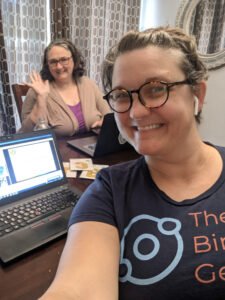
Insurance coverage for doulas sounds like a win for everyone. More clients, broader access, sustainable practice. But the reality is messier than the headline, and Dr. Robin Elise Weiss and Dr. Hillary Melchiors have both lived that reality from opposite sides of the billing process. Robin brings a background in health management system sciences, years of taking insurance as a doula, and experience running an oral surgery practice where insurance claims were part of every single day. Hillary brings the on-the-ground perspective of a doula agency owner who has navigated company benefits, watched payment timelines stretch, and done the math on whether Medicaid reimbursement rates actually pencil out. Together, they unpack what it genuinely means to accept insurance as a birth professional.
This episode covers the credentialing process, the critical distinction between insurance and company benefits like the Walmart employee program, balance billing rights, and the hidden contractual traps that can turn a missed call into a fraud risk if you are not paying attention. FSA and HSA accounts get real attention here as a lower-barrier starting point for most doulas, along with Robin’s “open season” approach to client education each fall. The conversation is practical and honest, including a frank look at why insurance-based doula work may make sense as one piece of a mixed caseload rather than the foundation of a sustainable practice.
Listen to This Episode
Episode Time Stamps
0:00 Introduction and Robin’s background in health insurance
1:26 Certification vs. credentialing: what the distinction actually means
3:31 TRICARE credentialing walkthrough
5:15 Company benefits vs. insurance: the Walmart example
6:32 Balance billing and why it matters for your bottom line
7:52 Lunch and learns as a business development tool
8:58 Billing increments, prenatal coverage, and what insurance actually pays for
9:09 No-show clients and the fraud risk you may not know about
9:53 You cannot inflate your rate to offset the insurance discount
10:14 Payment timelines: 2 days to 6 months
11:01 Clawbacks: what they are and why you need a lawyer to review your credentialing contract
12:52 Starting slow: one insurance client per month as a learning curve
13:41 Out-of-network billing and why shifting paperwork to the client protects you
15:51 International context: Canada, Europe, and where coverage is heading
16:06 FSA and HSA: the safer starting point for most doulas
17:53 Timing FSA/HSA payments around monthly account replenishment
18:22 The genuine benefit: serving vulnerable populations
19:26 Medicaid reimbursement as giving back when your caseload supports it
20:44 Finding local doulas who know what the insurance company will not tell you
21:11 Closing thoughts and community as a resource
Key Takeaways
Credentialing and certification are not the same process, and confusing them will cost you time.
Certification comes from your doula organization. Credentialing is a separate process with each insurance company that determines whether they will actually pay claims you submit. TRICARE, for example, has its own credentialing checklist modeled after the doula certification process. If you are not certified with one of the accepted organizations, the credentialing process stops there. Know the difference before you invest hours in paperwork that will not go anywhere.
Company benefits are not insurance, and that distinction is worth real money to you.
Programs like the Walmart employee doula benefit are company benefits, not insurance. The practical difference: you can often balance bill, collecting the full difference between the benefit payout and your actual fee. If Walmart pays $1,000 and your fee is $2,000, your client pays the rest and you walk away whole. That is not how most insurance works, and it makes company benefits a significantly more financially favorable arrangement. When you have the option, pursue employee benefit programs first.
Most insurance plans do not allow balance billing, and billing outside those terms is fraud.
If a client covered by insurance does not call you when labor starts and you never attend the birth, you typically cannot bill them for the missed service. That applies even if you were on call and available. It is also fraud to inflate your standard rate when submitting insurance claims to offset what the insurer pays. Your rate on file with the insurance company must be your actual rate. These are not gray areas. Read the contract before you credential, and consider having a lawyer review it if insurance will be a significant part of your practice.
FSA and HSA accounts are the lower-friction starting point for most doulas.
For doulas who are not yet credentialed with any insurer, flexible spending and health savings accounts are often the more practical path. Many HSA and FSA cardholders can use their accounts for doula services without requiring doula certification from the cardholder’s side. Robin recommends starting client education each fall during open enrollment season, when clients are making decisions about contribution amounts for the coming year. Structuring payment plans around monthly HSA deposits is a concrete tactic you can use with contracts right now.
Payment delays and clawbacks are real operational risks that require financial planning.
Insurance companies may pay in two days or six months. Clawbacks happen when a client’s coverage is retroactively invalid, and that clause is buried in the multi-page credentialing contract you signed. Building a business model where insurance payments are expected cash flow rather than backup revenue requires you to be able to float, tolerate billing disputes, and accept the possibility that money you already deposited could be reclaimed. That is a legitimate business risk assessment, not a reason to avoid insurance entirely, but it needs to be factored in.
Medicaid reimbursement rates often do not reflect a sustainable hourly rate, and that is a systemic problem, not a personal failing.
Hillary is direct about this: in Indiana and Kentucky, Medicaid reimbursement for doula services does not come close to a living wage when adjusted for time, overhead, and on-call availability. That is not unique to birth work; it is a chronic structural problem across all Medicaid-adjacent services. Some states, like Washington, have negotiated better rates. Robin shares an approach of treating one Medicaid client per month as a meaningful community contribution when the rest of the caseload supports it, rather than structuring the practice primarily around Medicaid volume.
Other experienced doulas in your market know things the insurance company will not tell you.
The insurance company’s timeline for credentialing and payment processing is marketing. The reality of what happens in your specific area with your specific insurer will come from the doulas who have already done it. Before you commit to credentialing with any plan, find out from local colleagues how long claims actually take, how frequently claims are rejected, and whether the administrative load is manageable for a solo practice. This is where a professional community is not optional.
Mentioned in This Episode
Episode 56: Pricing Your Doula Services: Tips for Longevity and Financial Stability
Doula Power, Payment, and Policy: Insights from Andrea Ford’s Anthropological Perspective
Can Doulas Take Insurance? What You Really Need to Know
How to Get an NPI Number as a Doula (For Free)
Navigating TRICARE Benefits for Doulas: How to Get Credentialed
Understanding Liability Insurance: What Doulas Need to Know
Why You Should Always Have a Contract with a Client (Even If You’re Working for Free)
Legal Requirements for Doulas: What You Actually Need (And What’s Just Fear Talking)
Your Doula Business: Exploring the LLC for Doulas
Doula, What Happens if Baby Comes Early?
Read the Full Transcript
Note: This transcript is auto-generated and may contain minor errors. Please refer to the audio for precise language, especially around clinical terms and data. And yes, sometimes “doula” gets interpreted… creatively.
Dr. Robin Elise Weiss [00:00:02]:
Hey, Robin. Hey, Hillary. How are you doing? I'm good. We're excited for this episode of The Birth Geeks. This is in my wheelhouse now.

Dr. Hillary Melchiors [00:00:12]:
I know. Well, so first let me just say, I all— never feel like I know enough to talk about insurance. And I think partly because I feel like I know enough to be dangerous.

Dr. Robin Elise Weiss [00:00:26]:
Um, you know, the— I think the— I, I jokingly say that I have a PhD in health insurance. Exactly. My PhD is in the School of Public Health, public health, uh, like it's in the School of Public Health, but it's Health Management System Sciences, uh, which is right up my alley. So health insurance is a big part of that and is a big part of what I do. And at the time that I was going to grad school, um, the Affordable Care Act was being debated and watching the implementation. Like, I, I know where I was when Supreme Court decisions came down about it. Like, so I, I know a little bit more than the average person about insurance, and I now teach about insurance, right? It's about different things. It doesn't make me an expert in any way, shape, or form.

Dr. Robin Elise Weiss [00:01:09]:
But when I'm in the classroom, I like to say, hey, I, you know, I have taken insurance as a doula. And here's something a lot of people may not know about me. I actually was a practice manager for an oral surgery center for about 3 years, and we dealt a lot with insurance. There.

Dr. Hillary Melchiors [00:01:26]:
Yeah.

Dr. Robin Elise Weiss [00:01:26]:
And so I think the big thing is understanding what it means to accept insurance. I see a lot of new doulas who come in and they're excited, right? They're hearing that, hey, insurance covers doulas. And a lot of people, you don't even know how to use your own insurance, let alone somebody else's insurance. And for example, uh, I, I put out a meme on Instagram a couple months ago and it was just like a panel of like conversations that I have where I'm like, Client says, hey, do you take insurance? I'm like, sure, what kind of insurance do you have? And they're like, the blue one, right? Like, it's like— and what people don't understand is like, when you say things like Humana, Blue Cross Blue Shield, like Wellmark, like these things, like, there are like 500 plans under each of those. And, and so a lot of people don't understand that, um, you know, your plan is one of $1,000 in that company, right? And that it may not— like, if we were both clients of the same per— of the same doula, like, that doula could be paid very differently even though technically we think we have the same insurance. So it's like there's a different policy. But also, not every doula is eligible to accept insurance, right? That person's insurance does cover doulas. So we want to demystify some of this for you all today so you can understand a little bit about the calculus for how you can decide, is this something you even want to think about? Because the answer is it can be really helpful for doulas to be able to accept insurances in some situations, but it's not the panacea that everyone thinks it is.

Dr. Hillary Melchiors [00:03:10]:
Exactly. That's the, that's the, the crux of it at the end of the day is like, mm, it's complicated. Unfortunately, I wish it wasn't, but it's, it's complicated. So, um, What— so let's— I, I think a really good place to start would be, what do you need? What does it mean to accept insurance? Like, what does it— yeah.

Dr. Robin Elise Weiss [00:03:31]:
Well, the first thing you wanna know is there is a difference between two words that get thrown about all the time. So there's certification, which is usually something you do with an organization that certifies doulas, DONA, CAPA, et cetera. Right? Then you've got, um, the credentialing process, which is typically once you're certified, you go to an insurance company. And again, I would wait and see, like, you don't want to necessarily go through a credentialing process with everybody, but like, who— like, what big companies in your area? Like, figure out, like, here's this one plan, right?, right? And then what is their credentialing process where I would have a potential of having a lot of clients? Because sometimes the credentialing process in and of itself can be burdensome. So I'm going to use TRICARE as an example because I'm pretty familiar with their credentialing process. It was modeled after the doula certification process.

Dr. Hillary Melchiors [00:04:32]:
Mm-hmm.

Dr. Robin Elise Weiss [00:04:33]:
And essentially when you look at their credentialing process for TRICARE to say, yes, this doula qualifies to submit claims to us that we will pay, which is what your client ultimately wants to hear. They have to, number one, walk through those steps, which is most of them— are you certified? Check that, that's most of them. And then they add CPR certification. So that's the one thing— if you're donut certified, that's the one thing you have to do. Now, they accept certifications from, I believe it's 6 different organizations, uh, and so, right, like are, are you certified with one of those organizations is going to be your first step. Because if the answer is no, stop the process. Don't waste your time. Right.

Dr. Robin Elise Weiss [00:05:15]:
Right. Um, and I think figuring out like what is not insurance is also important. For example, there is, uh, there is a benefit for Walmart employees. And I know you have had clients under this where as an employee, they will pay up to $1,000 towards your doula. Now, you wanna talk a little bit about what that was like for you? Now, this was not insurance.

Dr. Hillary Melchiors [00:05:43]:
No, that's— it's a company benefit actually. I mean, it's, it was very simple. It was literally like filling out some paperwork.

Dr. Robin Elise Weiss [00:05:50]:
Mm-hmm.

Dr. Hillary Melchiors [00:05:51]:
Um, to, yeah. And I mean, the nice part about, uh, yeah, I mean, it was nice that they do that for their employees. We ended up actually, uh, I don't wanna get too deep into it, but we ended up like, you know, like, hey, you work at Walmart. Did you know that you're eligible for this benefit, and it helped, you know, attract some clients for us, um, specifically, which was— but that's a good thing. Yes. Um, but, and they're not the only company that does that. Then there are other companies that have, you know, benefits, right? So benefits packages that— and that pay for benefits packages for their employees that then, you know, also have a credentialing thing, um, as well. But that's outside of insurance.

Dr. Hillary Melchiors [00:06:29]:
That's not insurance. I think that's the distinction you're making.

Dr. Robin Elise Weiss [00:06:32]:
Correct. And one of the big benefits of having a benefit like that for the doula is that you can do what's called balance bill. Mm-hmm. So if your fee is $2,000 and Walmart pays you $1,000, the client pays you the other thousand. So essentially for that client, they got 50% off their doula. So it's a benefit to them in that they're only out of pocket half of your fee, but your benefit is you walked away with the whole fee, right? Right. For a little bit of extra paperwork. That's not how insurance typically works, and that is the big differentiator.

Dr. Robin Elise Weiss [00:07:05]:
So I always tell people, when you have a chance to do some kind of employee benefit like that, go for that first. That's going to be where you are going to get more bang for your literal buck— actually, more buck for your literal bang, um, on that one. And so if you have something like that in your area where you have a lot of employees and you want to do exactly what Hillary just said, go out and find yourself some more employees.

Dr. Hillary Melchiors [00:07:26]:
Right?

Dr. Robin Elise Weiss [00:07:27]:
That is where you want to go do lunch and learns. Uh, you go to that company and you're like, hey, can I come and do lunch and learns? I want to talk about like how to know if you're in preterm labor. Here are the warning signs of preterm labor. Here's a freebie from the Marcha Dimes, right? And you were just like, I'm a doula. I want to help you have healthier employees. And I'm just going to talk during lunch hour one day. And guess what? That gets you in front of a whole lot of people. They get your name, number.

Dr. Robin Elise Weiss [00:07:52]:
And you're like, by the way, did you know you have this fertility benefit? Like, mm-hmm. So, um, anyway, again, whole other story, but that is a good way to start dipping your toe into things that look like insurance. So back to the insurance process. So at credentialing, if you qualify, like, awesome, you are good for the credentialing process. But then I want you to think about how much do they actually pay? What do they pay for? So, for example, a lot of places will let you charge a little bit, uh, of money for prenatal visits broken down usually in 15-minute increments up to like 48 increments, right? Right. And so you can bill for that, and then you might bill for the birth separately, and then postpartum visit may or may not be covered even as a birth doula. It may have separate coverage for postpartum doulas, or it may just have one benefit, um, But one of the big things you wanna know is, can you balance bill? Very few insurances, the answer is yes. There are a handful out there, but the majority of them are no, which means if you get that no-show, if somebody doesn't call you when their time to have the baby, you cannot bill the balance.

Dr. Robin Elise Weiss [00:09:09]:
You're out that money. You're SOL.

Dr. Hillary Melchiors [00:09:12]:
Legally, you cannot bill.

Dr. Robin Elise Weiss [00:09:13]:
It's just insurance fraud if you bill for it, even if you're billing the client. That is insurance fraud. Mm-hmm. So that's one of the things you don't— I'm gonna say it right here, do not commit insurance fraud. And that's the thing, you can do it accidentally if you don't know, which is why Hillary and I wanna tell you these things.

Dr. Hillary Melchiors [00:09:31]:
Well, and that does then alter sometimes what your contract says, right? So for our private pay clients, we have like a, a no-call clause, right? If you don't call me but you're a private pay client, That's a different story. But if you have insurance, like, I have to like then tweak what my contract says because of what I'm allowed

Dr. Robin Elise Weiss [00:09:53]:
to— but you also can't alter your payment structure, correct? In terms of like, you can't have a— here is a private pay and here's an insurance pay. Like, some people will say, well, they'll pay 80% of what I usually charge, so I'll just bump it up to make up that difference. Insurance fraud. Can't do it. Right.

Dr. Hillary Melchiors [00:10:12]:
Yeah, exactly.

Dr. Robin Elise Weiss [00:10:14]:
The other part of this is how long does it take you to get paid? Mm, that part.

Dr. Hillary Melchiors [00:10:20]:
I mean, I, I, of course you hear all the terrible, like, I, I've heard totally both ends of the spectrum, right? Like, oh, we got paid in 2 days and oh, I didn't get paid for 6 months. Um, yeah. And so figuring out if you can float along until you get actually paid from the insurance company and you may have to go back and forth with them a couple times because up for technicalities, um, right? You filled out the paperwork wrong, you checked the wrong box, um, you sent it to the wrong person at the insurance company. I mean, like, there are a whole lot of snafus that can happen, um, from both sides of things, not laying blame on any side of that.

Dr. Robin Elise Weiss [00:11:01]:
Yeah, and there are, um, there are also clawbacks which people don't realize. Like, they have the ability to come back— the insurance company does— and say, oh, this person really hadn't paid their premiums, And that doesn't happen very often, but I've seen it happen once recently. And I know that that doula is really— it is buried in the 9-page fine print contract that you sign when you credential with an insurance company. So that's why it pays to go over it. Um, while, you know, I, I always want to talk to someone who's smarter than I am about that kind of thing. That might be if you're planning on having a solely in insurance-based business, it might be worth your money have a lawyer look at that and tell you what you can and can't do. Might be worth that hourly fee for them to look at the contract and say, here's how you need to change that contract and here's how you can protect yourself, uh, just to have that peace of mind about it.

Dr. Hillary Melchiors [00:12:00]:
But Robin, question then, if they claw it back, which I've never had that happen before, um, I'm, I'm sure it's just a matter of time at some point. And is it typically because then that person is no longer a —like a member of that insurance policy? And then does that mean you can, you can balance bill? Like you can go back and— I

Dr. Robin Elise Weiss [00:12:20]:
don't know the cert— the instances here. I can tell you that, um, when I worked for the oral surgery center, the handful of clawbacks we had, we got really good because sometimes the callback was, you know, we checked the wrong box, right? And then they were like, sorry, you didn't check the right box. We're going to take our money back. And at some point, like literally, we used to laugh. We would get checks for like 3 cents. It's like, it costs you more to send us this check. Right? Like, then, right? Like, then it took, like, e-prop. Oh, right.

Dr. Hillary Melchiors [00:12:51]:
Just give us the 5— the stamp

Dr. Robin Elise Weiss [00:12:52]:
to mail the check to me. Send us the $5. Like, look, I— like, can I just pay you to go away? I'm done. Like, but this is, this is why you want to think, like, do I need to— I always tell doulas, do not go in thinking I'm going to do 100%, like, insurance clients. Like, this is— as you're dipping your toe in, I encourage you to think, I'm going to take one person every month or so and see how it goes because you're going to learn it's going to take a while and then you're going to kind of figure out the rhythm. Hey, this insurance company pays in about 3 weeks. The other thing is, and I had this more early on as I had people who were trying to submit for reimbursement or they were trying to get a claim on their own, which people can do that. Like you would be out of, uh, out of network.

Dr. Robin Elise Weiss [00:13:41]:
You're not credentialed with that organization. Um, My understanding is you— most of them, and again, please check, you can balance bill if you're out of network because you're not— you don't have a contract with the insurance company. But is your client really going to submit the paperwork on time? They have a brand new baby, right? A couple things like that. And then it was like too late. Like the insurance told them, too bad, so sad, you didn't file this soon enough. Right. The client was like, I don't have the money. And I've already done the work.

Dr. Robin Elise Weiss [00:14:14]:
So that quickly made me change my contract to, I am happy to give you all the paperwork so you can file for reimbursement, meaning you pay me and then if you get reimbursed, that's awesome, right? Because that would still be out of pocket, which is where the balance billing doesn't— like, they're applying for reimbursement, so you don't have to deal with it. And guess what? When their money is on the line, they're more likely to fill out the paperwork.

Dr. Hillary Melchiors [00:14:37]:
Yeah, absolutely. Me too, by the way. Yeah, I, I think one of the things that, that I always remember about insurance is my, my mother used to work for a large family practice. So like, I knew very well they employed one person whose entire job was to deal with all of this all of the time. Um, and so as an independent doula, even as a, as a doula who owned an agency, that's

Dr. Robin Elise Weiss [00:15:05]:
me.

Dr. Hillary Melchiors [00:15:05]:
Um, the, the system is not set up for us to really— it's just, it's not. Um, and that's okay. And so be cautious about it and take your time. And, you know, I love, I love your advice there, like, just feel it out. I also want to be clear, um, we're talking about U.S. insurance, right? So when we think about talking about our Canadian friends, for example, um, I actually— this is what I was looking up, um, right before we got to talk— is, um, the province— the provincial insurance insurance doesn't generally cover doula services. Um, so similar to here, we're moving toward, you know, Medicaid is another discussion we could have, but, um, but private insurance is, is covering it a lot more often up in Canada as well. So it's not covered.

Dr. Hillary Melchiors [00:15:51]:
I am starting to talk to some of my European colleagues who are, who are like, okay, well, they're starting to cover things like postpartum services, so it's

Dr. Robin Elise Weiss [00:16:03]:
coming.

Dr. Hillary Melchiors [00:16:03]:
Um, yeah, it's so fun to be at the forefront.

Dr. Robin Elise Weiss [00:16:06]:
There's also like FSA and HSA, like flexible spending, healthcare savings accounts. There are ways the doulas can find ways to get paid that are not through insurance. And I think for the vast majority of doulas, those are going to be the safer areas. And that's where people who have healthcare savings account or flexible savings— flexible spending, right? They often have a credit card that they just like, they can charge whatever as long as it falls within a certain category. Now I do always say, hey, like, check the fine print, check your policy.

Dr. Hillary Melchiors [00:16:36]:
Yes, always, always.

Dr. Robin Elise Weiss [00:16:38]:
Right. But generally, they don't even check to see if people are certified. So this is something you can use for those first 2 or 3 births as you're getting certified, which is, right, really beneficial. And it's something that I always tell everybody around, like, starting in August, like, start doing some education in your area, start doing some social media. Hey, right. I call it open season, right? It's insurance open season, right? As you start to pick your, pick your plan for next year, if you're planning on having a baby, right, you might want to put more money in your FSA or HSA, right? And then use it to spend as doula services, right? But also, like, with that credit card, if I— one of the things I'll do is if I have somebody that I know who has this, I will say, right, like, maybe they put $200 a month in their account on, you know, the first of the month, right? Put in $100, their company puts in $100, so $200 is there. When I write their contract, maybe they pay like a good chunk down, and then they're like, I'm gonna pay $200 a month. And I will say— I always say like, on the third, give it a couple days to go in.

Dr. Robin Elise Weiss [00:17:53]:
Sure. Right. And then, you know, when they put in their card, they put in the info, it'll be like the 3rd of the month, um, every month will go blah, blah, blah for however many months

Dr. Hillary Melchiors [00:18:04]:
until it's paid off. Until it's paid off. I mean, there really are some pros, right? So we've talked about some like really challenges with taking insurance, but I think, I think it's also really important to say like, I'm like, I love the fact that insurance coverage means I can serve more people.

Dr. Robin Elise Weiss [00:18:22]:
Yeah. Particularly vulnerable populations.

Dr. Hillary Melchiors [00:18:26]:
Mm-hmm. So, yeah. Although I, I will say, tri— I, I have not done TRICARE. TRICARE, um, well, in my area it's pretty sparse. Um, unless I wanted to drive, um, further south, I think where you were stationed, uh, which is a little outside of my service area. Um, But the, the struggle for me has been, um, you're still not paying, um, enough for me to, like, for my time. And, um, yeah, that's, that's been my biggest complaint. It's like, in adjusted dollars, you're now paying less than I was charging when I started out doing this, and that's not okay.

Dr. Hillary Melchiors [00:19:10]:
I can't do that. And I, again, I'm very sensitive to the fact that that's pretty normal for, like, Medicaid and, like, those other, um, especially for vulnerable populations. That's— we're not the only, like, providers that have that same exact struggle.

Dr. Robin Elise Weiss [00:19:26]:
Um, well, that's where finding that balance, right? I look at that as giving back. So for example, if my goal is to have 3 or 4 clients a month, and if I have, um, you know, let's say 3 clients who can pay my full fee, then I'm going to bring home enough that money— I— money that month right, that I can afford to lower my rate, essentially, is what I'm doing when I say yes to somebody who— if I accept a Medicaid payment, or— and there are some states that are getting decent reimbursement for Medicaid clients.

Dr. Hillary Melchiors [00:20:01]:
There's Washington.

Dr. Robin Elise Weiss [00:20:03]:
Yeah, uh, right. But so it's not, it's not, it's not everybody, right?

Dr. Hillary Melchiors [00:20:07]:
We just happen to live in Indiana and Kentucky.

Dr. Robin Elise Weiss [00:20:11]:
We do talk to a lot of doulas, but I think it's a great way to, to build it in, to give back, to try it out. And I, I don't wanna scare somebody away from medic— from, I'm sorry, not Medicaid. I want insurance. I want to like, have you understand that you can't pop outta doula training and, and start doing this. Sure. This is something that I want you to dip your toe in intentionally. Mm-hmm. And thoughtfully and finding people, right? We all know people who they love this stuff.

Dr. Robin Elise Weiss [00:20:44]:
Mm-hmm. And so find other doulas in your area and listen because that's really gonna help you understand some of that stuff. Like, How long does it really take? The insurance company is gonna tell you, oh, it's lickety-split. Could they pay you that quickly? Absolutely.

Dr. Hillary Melchiors [00:20:57]:
Will they pay you? Are they going to?

Dr. Robin Elise Weiss [00:20:58]:
That's another story, right? So like talking to the other doulas in your area can be really helpful when it comes to trying to figure out, are you going to have that ability?

Dr. Hillary Melchiors [00:21:11]:
Absolutely. And I, I, I do think this is when it's really nice to be able to like work together and to, to help each other and get through it. So I always appreciate being able to call you Robin.

Dr. Robin Elise Weiss [00:21:26]:
Well, be sure to check out the, uh, check out all the show notes, and we will give you lots of help in the show notes. And thank you for listening to The Birth Geeks.

Dr. Hillary Melchiors [00:21:36]:
Yeah, thank you.