
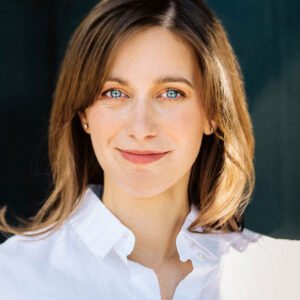
Episode Summary
On this episode of TBG 2026, Dr. Hillary Melchiors sits down with clinical psychologist Kerry Makin-Byrd for an honest, experienced-grounded conversation about burnout, moral injury, and the emotional realities of long-term careers in birth and mental health work. Kerry Makin-Byrd shares her journey from Colorado to Wellington, New Zealand, reflecting on how changing environments—and even continents—reshaped her clinical practice, her understanding of trauma, and her own capacity to feel and recover.
Together, they cut through common misconceptions about burnout, digging into why “resilience” is not a solo project and why systemic factors, not individual failings, drive much of the exhaustion experienced by birth workers and medical professionals. Real-life stories and concrete practices emerge, from negotiating boundaries in a field that rarely rewards them, to finding good enough care when perfection is always just out of reach.
Throughout, both Dr. Hillary Melchiors and Kerry Makin-Byrd keep the focus practical and grounded. They talk about the importance of professional support, not just for clients or patients, but for providers themselves, and challenge the persistent myth that burnout is a personal shortcoming. Whether you are fresh out of training or years into a birth or clinical career, this conversation names the realities you’re living and offers direction without platitudes.
Grab your coffee or finish the dishes on call, this is the episode that won’t explain what burnout is, but will actually talk about what to do when you’re in it, why it’s not your fault, and what might (just maybe) help you get through.
Listen to This Episode
Episode Time Stamps
00:00 “Embracing Change and Adventure”
06:07 “Challenges of International Paperwork”
09:35 “Finding Safety to Feel Deeply”
11:09 Emotional Numbness in the U.S.
16:42 Burnout and Moral Injury Explained
20:36 “Perspectives on Work and Suffering”
22:04 Early Career Burnout Patterns
26:47 “Rethinking Burnout Solutions”
29:11 “Rethinking Burnout and Resilience”
33:58 “Finding Sanctuary in Chaos”
38:14 “Start Here: Overcoming Overwhelm”
42:01 “Doula Challenges and Emotional Balance”
43:19 “Presence Over Perfection in Caregiving”
46:51 “Hockey Fan Excitement Shared”
Key Takeaways
Burnout and Trauma Exposure in Birth Work and Healthcare
- The prevalence and causes of burnout among doulas and birth professionals.
- The short average “shelf life” of birth doulas and why.
- Impact of witnessing birth trauma and obstetric violence on providers.
- Importance of therapy and regular emotional offloading for birth professionals.
Definitions and Distinctions: Burnout, Compassion Fatigue, Moral Injury, and Related Terms
- Exploration of terminology: burnout, compassion fatigue, moral injury, empathic distress, vicarious trauma, work overwhelm.
- How Kerry Makin-Byrd frames these experiences as different forms of work-related suffering.
- Moral injury’s origins and application in birth and healthcare settings.
- The fluidity and overlap between these experiences.
Experience, Boundaries, and Professional Growth
- How experience leads to better boundaries and clearer sense of professional scope.
- The disconnect between ideals learned in training and the realities of practice.
- Importance of redefining success and adjusting perfectionism over a career.
Systemic vs. Individual Factors in Burnout
- Overemphasis on individual “resilience” and personal intervention.
- Evidence that system and organizational changes (like safe staffing) have more impact than individual interventions.
- The pressure birth workers place on themselves and reframing burnout as a natural consequence of meaningful work.
Recovering from Burnout with Limited Systemic Support
- Challenges in environments that do not support recovery from burnout.
- Creating personal “sanctuary” and boundaries as a response.
- The social and cultural difficulty of being “the weird one” who prioritizes self-care.
- Importance of community, teamwork, and knowing when to lean on others.
Prioritization, “Good Enough” Care, and Sustainability
- Explicitly choosing what to prioritize when demands exceed capacity.
- The value of “good enough” care to enable longevity in care professions.
- The impracticality and unsustainability of perfectionism for long-term providers.
Mentioned in This Episode
Start Here: a practical guide for the overwhelmed
Doula Burnout Prevention: Things to Do After a Difficult Birth That Actually Work
Read the Full Transcript
Note: This transcript is auto-generated and may contain minor errors. Please refer to the audio for precise language, especially around clinical terms and data. And yes, sometimes “doula” gets interpreted… creatively.
Dr. Hillary Melchiors [00:00:03]:
Hello, Carrie Makin Bird. How are you today?

Dr. Kerry Makin-Byrd [00:00:07]:
Very good. How are you?

Dr. Hillary Melchiors [00:00:09]:
I'm so excited that you're calling me from the future.

Dr. Kerry Makin-Byrd [00:00:13]:
That's right, exactly. It's, uh, what, like 12, 12 hours, maybe a little less?

Dr. Hillary Melchiors [00:00:22]:
Um, oh, I think it's— it— so it's almost 2 PM here.

Dr. Kerry Makin-Byrd [00:00:26]:
Um, oh, I see. So I'm Wednesday morning and you were Tuesday afternoon.

Dr. Hillary Melchiors [00:00:31]:
The afternoon. Yes, love it. So to be clear, I'm in Indiana. Where are you located?

Dr. Kerry Makin-Byrd [00:00:39]:
Um, I'm in Wellington, New Zealand.

Dr. Hillary Melchiors [00:00:41]:
That's amazing. Um, I've not been to New Zealand. I, um, I served on a board with an amazing Kiwi, um, Carolyn Tranter, who's a doula trainer from New Zealand, who— she doesn't live in New Zealand anymore. Um, and then now I have— I, as we were just discussing, uh, before I hit record. I have some friends that just moved there. It seems like a magical place. So let's start with how the heck did you end up in New Zealand?

Dr. Kerry Makin-Byrd [00:01:10]:
Yes, so, uh, my partner, my husband, does, um, scientific work that has a lot of, um, international interests. So he ends up having a bunch of international colleagues. And probably when we were in our 20s and in love and very adventurous, um, started saying to his colleagues, um, we would love to have some time where we were living internationally. If anything ever comes up, keep me in mind. So that was a conversation he said many times across the 2000s. And then, um, a colleague from New Zealand reached out to him in 2021 and said, hi, I am from New Zealand, from the future. And we have— we just posted a job that you may be interested. And that is kind of— and on one hand, we were, um, at that point, I think the COVID vaccine was just becoming kind of widely available.

Dr. Kerry Makin-Byrd [00:02:22]:
Um, we— everyone was looking forward to a future where people were coming back to school and work. And on— and we had an 8-year-old and Initially, we thought, you know, there has been way too much transition. This is not the right time. And then when we thought about it again, maybe this is the perfect time because we're— we know we're stepping into a big transition regardless. So why not have that be this kind of wild adventure? And I feel incredibly grateful that at the time I was talking it through with, um, a boss that I, uh, really respected, and he said to me, it will be a great story regardless. Go for a year and see, just see. And, and one of, one of kind of in our marriage, one of our shared regrets is we hadn't taken a similar opportunity during our graduate work. So we felt like, all right, let's— so we did it.

Dr. Kerry Makin-Byrd [00:03:23]:
So we went through it. So exactly. So then we land. So we landed in New Zealand and we knew we'd be here for a year. And that was 5 years ago. So we feel really— exactly. And then now the plan is to be here long term and feel really fortunate.

Dr. Hillary Melchiors [00:03:41]:
Yeah, absolutely. So were you— so let me rewind a little bit and say, so were you working as a clinical psychologist then, um, before you moved? And where were you located? Were you in California?

Dr. Kerry Makin-Byrd [00:03:53]:
Oh, exactly. Yes. So I was in— so I was in Colorado, um, in Denver, Colorado. I had a part-time private practice. At that point. So I'm a clinical psychologist. And then I also— at that— when we made the transition, um, I was fortunate enough to be part of a mental, um, mental wellness, um, startup, uh, that was really interested in how can we build, um, affordable supportive, uh, groups across an app. So, um, when I transitioned, you know, I feel grateful that the startup was very supportive of, um, no problem, let's figure out the time zone, let's figure out how to do the kind of, um, how do we, we keep paying you as an employee across these country lines.

Dr. Kerry Makin-Byrd [00:04:42]:
Um, yeah. And then once it became clear that we just really love New Zealand and planned on being here long term, then I transitioned to, um, I really wanted to be kind of in 3D in New Zealand and working with people and being— becoming embedded in the culture and cultures of New Zealand. Uh, so I— within New Zealand, I then had— I was very quickly really interested in building up my private practice, um, providing— much of my clinical work is, um, I do trauma work with people who have experienced trauma and PTSD treatment. I do clinical supervision with therapists and other medical professionals. And then, um, I also write. So those are kind of the three kind of work tasks I do. So I worked within our public— New Zealand's public health system for a while on their oncology support team, and then transitioned fully to private practice.

Dr. Hillary Melchiors [00:05:52]:
So, oh, fantastic.

Dr. Kerry Makin-Byrd [00:05:54]:
Yeah, yeah, I really like it.

Dr. Hillary Melchiors [00:05:56]:
Well, and the licensing situation, was that easy to navigate? Sorry, this is totally not what we were planning to talk about, but I'm excited to talk about— I have—

Dr. Kerry Makin-Byrd [00:06:04]:
Exactly.

Dr. Hillary Melchiors [00:06:06]:
Exactly.

Dr. Kerry Makin-Byrd [00:06:07]:
It was— it— one of our mantras for this whole adventure is it's just paperwork and we can do paperwork. So is it— could I tell you a story about how incredibly onerous and the number of forms and getting the fingerprints and et cetera, et cetera, et cetera? Yeah, of course. Of course I could. And the reality is that, I mean, I, I think there are many professions that when they cross country lines, and this happens in the US too, even states here, there's abs— across states, exactly, where there's not a direct translation. Um, that's something that my close friends who are American trained as nurses in New Zealand, I think that can be a much harder translation because, um, there are different nurse qualifications in New Zealand and different kind of levels of training. So realistically, I— it was a lot of paperwork. It was no problem. It— they're happily— the Board of Psychology in New Zealand is aware of how many psychologists are needed and is supportive of, um, translating some of the kind of international licensing things.

Dr. Hillary Melchiors [00:07:30]:
Oh, nice. Well, I mean, they didn't have to literally translate them, so that is—

Dr. Kerry Makin-Byrd [00:07:35]:
no, fair, that's right, exactly.

Dr. Hillary Melchiors [00:07:38]:
Yeah, that is also helpful for the English. Although I don't know if New Zealand has a thing similar to Canada where they— everything has to be in like English and Māori or something.

Dr. Kerry Makin-Byrd [00:07:49]:
Oh yeah, yeah. So that really— that depends a little bit on kind of, um, who is in power, but it is part of kind of the Treaty of Waitangi is that there is this kind of co-governance. And I think broadly the New Zealand people, um, highly prioritize and appreciate that, yeah, there are two peoples and cultures among us. Um, and, uh, I feel incredib— one of the unexpected benefits for personally of moving to New Zealand is how much my personal and professional, um, understanding of the world and wellness and the spirit has expanded with, um, more education about Māori perspectives.

Dr. Hillary Melchiors [00:08:40]:
So, um, has, has New Zealand— has, has moving abroad and living in New Zealand and how they relate to trauma and deal with trauma there? Does— has that changed your perspective?

Dr. Kerry Makin-Byrd [00:08:53]:
Uh, let me see. Um, I think there are two— I think there are two ways— there are two ways my, um, yeah, my sense of kind of trauma has evolved. One is on a personal level. I, um, I'm only speaking for myself. I did not have an awareness of how in some ways frozen and guarded I had become to navigate, um, neighborhoods and settings, um, within the US that were physically unsafe.

Dr. Hillary Melchiors [00:09:33]:
Oh, okay.

Dr. Kerry Makin-Byrd [00:09:35]:
And that was a real transition moving here, kind of seeing across the years the way Yeah, there was this real expansion in terms of like what I— what was safe for me to do alone as an adult woman. What the amount that I could feel like physically and emotionally feel when tragedies came up both here and abroad. One of the things I was really struck with the first couple years is, you know, a, um, there would be news of a shooting and I would be processing it next to a couple close friends who were still in America. And, and I think coming from a like trauma therapist standpoint, it makes perfect sense. You are mindful about how much you let in because you need to keep— you need to keep yourself kind of regulated and able to go on with the rest of your day. Um, and that was pretty surprising to me, just how that, um— I think there were— across the time I've been in New Zealand, I think I have felt safe enough to have grief responses that I did not feel able to fully have.

Dr. Hillary Melchiors [00:11:09]:
Um, yeah. Oh my goodness, sorry, that, that just— yeah, I think if you haven't been abroad or you don't have friends that live in other countries, I think here in the US sometimes we, we get almost anesthetized to this, um, to our feelings because we have to. It's like you have to carry on, um, and the level of, uh, for lack of a better word, like depravity that we have to continually be exposed to. And I'm trying to be generous. I mean, we're a very big country with a whole lot of people and, um, a really dumb 24-hour news cycle. And, um, and so, um, I like personally Personally, I have found the longer I've been, you know, I've been back since 2012, um, in the, in the States, and I, I just protect my space and like so much more than I ever did when I lived abroad. So I, I totally relate to that, like, expansion of what you're allowed to feel.

Dr. Kerry Makin-Byrd [00:12:25]:
Um, yes, absolutely.

Dr. Hillary Melchiors [00:12:29]:
Yeah, absolutely. You're making me miss living abroad. Sorry. Uh, which— that's okay. That's, uh, I have a therapist.

Dr. Kerry Makin-Byrd [00:12:38]:
Don't worry. Oh no, I— please know I trust both of us can feel our feelings and also, and you know, there's space for that as well.

Dr. Hillary Melchiors [00:12:48]:
Oh, for sure. Also, I think my therapist gets a shout out on like every podcast episode.

Dr. Kerry Makin-Byrd [00:12:53]:
Love. Oh, I— speaking for the therapists of the world, that is special gift. I'll tell you, one of my, uh, my husband and my, um, couple therapist when I was pregnant, um, said to us at one point, um, he was talking about updates, but still applies, um, rare and very appreciated. Shout outs, rare and very appreciated.

Dr. Hillary Melchiors [00:13:26]:
I, I love shouting her out. She's, she's fantastic. I, and I've been with her for a while, so I think it's, it's an important thing. Well, as a doula, one of the things I tell people all the time, please, you need a therapist. You need someone who can listen and you don't feel like you have to listen to them, like, to their stories.

Dr. Kerry Makin-Byrd [00:13:48]:
You, like, you get—

Dr. Hillary Melchiors [00:13:48]:
you need to be able to offload. That's really, really important. Um, because one of the things I'm really, really passionate about is that And I wrote a book chapter about it, like, as doulas, as a birth doula specifically, that repeatedly witnessing some things like obstetric violence, um, that, that is a fast ticket to burnout if you don't figure out how to deal with it. Um, and it's really, really important. I think it's one— in my opinion, it's one of the reasons doulas have such a short— birth doulas specifically have a short shelf life. Um, the average birth doula lasts around 3 years. In case you didn't know that.

Dr. Kerry Makin-Byrd [00:14:30]:
It's a little— wow. I knew burnout rates were incredibly high among birth workers, and I did not— that is, that's such an important metric, kind of the, um, span of a career.

Dr. Hillary Melchiors [00:14:46]:
Yeah. And I mean, it's something that we talk about pretty regularly is like, how can we make that better? And it's not just burnout. Burnout's one thing, right? That's one of the, the spectrum of things that is happening, that are happening to doulas as to why they're quitting this work. But I, I really very, very much feel that burnout is a big problem. And it's not just birth doulas. I think I see it among postpartum doulas as well. Um, and then of course I see it among, you know, providers that I, I see regularly. Um, my favorite is when they've just come back from vacation.

Dr. Hillary Melchiors [00:15:31]:
Like, hey, I see you. Um, So can you talk a little bit from your experience, um, talk about the difference a little bit between burnout and compassion fatigue? Because I feel like people mix those two things up a lot.

Dr. Kerry Makin-Byrd [00:15:45]:
Yes, yes, yes, yes. All right, so I, um— do you mind if I expand the question out a little bit? Yes. Okay, beautiful. So, um, this is kind of, um, Carrie 2026 language. I am— so many people who are interested in this work or have experienced it themselves have heard one of the following terms: uh, burnout, compassion fatigue, empathic distress, vicarious trauma, moral injury, um, or work overwhelm. You know, we can get into lots of kind of different terms, but those are the big terms. And, um, most of the training I will be doing this year with people on the ground. Broadly, what I am saying to people is you use the word that is best for you.

Dr. Kerry Makin-Byrd [00:16:42]:
Um, this is suffering. This is a— this is some level of suffering that is related to the work you do. And empirically, we have not— I think, I think there has been some really interesting work done in the last couple years demonstrating that burnout and moral are distinct and over— distinct yet overlapping experiences. So for anyone who doesn't, um, isn't fresh up on their moral injury lit review, moral injury is defined as, um, the, um, ex— the consequences of experiencing, um, some either observing or engaging in an activity that you believe to be morally wrong. And so usually when we talk to— and this came out of kind of soldiers and veterans, we were hearing about it first, and then we found that many healthcare workers and first responders are also Um, and like you said, experiencing and observing birth violence.

Dr. Hillary Melchiors [00:18:02]:
Excuse me.

Dr. Kerry Makin-Byrd [00:18:03]:
You're fine. I had something in my throat. Um, uh, so, so moral injury is when you either do something that you morally disagree with, you perceive some— somebody else doing something, or you, um, perceive something that you disagree with and don't step in to stop. Um, Pardon me, I'm going to cough for a second.

Dr. Hillary Melchiors [00:18:27]:
No, you're fine. Um, I think, um, the— it's the not acting part for me as a doula that, that, that's, um, which we can get into that a little bit. Um, yes, I, I think especially for doulas, I think that that can be really challenging. And something that I was on a committee that helped revise our code of ethics for DONA International, and we were like No, you're allowed to have a trauma response. Like, if you don't act, there's nothing wrong with you. That doesn't mean you did something wrong.

Dr. Kerry Makin-Byrd [00:19:01]:
It's incredibly human. Exactly. Exactly. So we— so to your original question, all right, Carrie, what's the difference between burnout and compassion fatigue? As far as I know, there is not— there is not— there's not consistent data that empathic distress or compassion fatigue are unique things separate from burnout. And it's a little bit like what element of suffering is most prominent with you when you're engaged in the work. So the World Health Organization defines, um, really highlights 3 important aspects of work burnout: feeling really depleted or exhausted, um, feeling incredibly negative or cynical, or having mental distance from one's job. And then, um, reduced professional efficacy. So, um, what you hear a lot around kind of the staff room or when you're taking a walk with your best friend is, I just, I feel like I'm going through the motions.

Dr. Kerry Makin-Byrd [00:20:12]:
I feel like I'm not making an impact. I, um, I don't care. I think about it all the time. I'm just so exhausted. Um, so That did— that was an incredibly extensive answer to your question. But Hillary, how does that sit? How does that sit and match or not match your experience?

Dr. Hillary Melchiors [00:20:36]:
Um, well, as far as my professional experience, yeah, absolutely. Um, I think, I think so. I, to put my anthropologist hat on a little bit, I think very much back to like the Buddhist definition of suffering. And the idea of the— so if we're talking about— sorry, I'm gonna get super geeky for a second, but some of it's very culturally patterned, right? So the whole idea of if you view your job as like, I should always be effective, I should always be on, I should always be helping people, that's one thing. But if you're like, no, life is suffering, that you're coming at it from a very different perspective, and I'm helping to reduce some of that suffering, or I'm helping people go through the suffering, right? And I'm not, I'm not saying I take either one of those perspectives. I'm just saying there's a, there's a huge variation, and some of it is cultural. So I, I kind of like— it's interesting to me, that's all.

Dr. Kerry Makin-Byrd [00:21:39]:
And yes, it's—

Dr. Hillary Melchiors [00:21:40]:
oh, the language. Well, and I think back to, you know, um, like the culture and depression work by— I'm sure you've read some Kleinman and stuff like that. So like when you're talking about the actual experience of like mental illness and mental and distress, um, can be very very different culturally patterned. So that's all I just got— I got excited is really the moral of that story.

Dr. Kerry Makin-Byrd [00:22:04]:
Yeah, absolutely. Well, Ian, to your point, I mean, what we see, at least in, um, much of the kind of European and United States research on burnout among medical professionals, um, there are much higher burnout rates in the first few years of their career. And what I see clinically is this incredible disconnect between the ideas of what a good doctor or a good nurse is when you're fresh and you graduate. And also, I mean, I do a lot of therapist supervision as well. There's, um, my best friend and I call it— for ourselves, we call it the PhD voice. Like, there's this kind of incredibly— like, I'll speak for myself— there's this incredibly critical, perfectionistic expectation for myself that, that was fueled by parts of grad school.

Dr. Hillary Melchiors [00:23:02]:
How dare you rest?

Dr. Kerry Makin-Byrd [00:23:04]:
Oh, yeah, absolutely. Absolutely. And, and what are you talking about? You need more than 12 weeks to treat someone? Are you even doing good work? And that, and that is so— and I think the people that, um, the people that are able to update their understanding of what does this care look like on the ground Uh, which can include, um, like, yes, we have human experiences to violence and suffering, is— can we make space for that and still find something meaningful in the work and find a much richer definition of what we see as a successful life that helps refuel us to come back to really challenging care?

Dr. Hillary Melchiors [00:23:55]:
Yeah. And do you feel— so I have felt that the longer I do this work as, as a birth doula, birth and postpartum doula, the better I get at healthy boundaries, um, and maintaining those and understanding where my job ends. And that's okay. Um, and being comfortable in the, like, in the not knowing. And that's okay because it's not my job to know all of that stuff. Absolutely. But, and I think that, that to me, that really speaks to that, that disconnect between the ideas, right, these ideals, and then the actual experience of doing it. Um, but I don't know if that resonates with you.

Dr. Kerry Makin-Byrd [00:24:37]:
Oh, I totally agree. Absolutely.

Dr. Hillary Melchiors [00:24:40]:
Um, because I love my professors from grad school, don't get me wrong, but like, no, they were answering my emails at 3 AM. Okay, just know, right, right, right, totally. Yeah, we literally— when I was in grad school, there was one professor, always, always she she answered emails at the most absurd times of day. And so we, we would compare, oh well, I got an email at 3:20, what time did you get—

Dr. Kerry Makin-Byrd [00:25:05]:
oh my God, absolutely. Well, it is interesting, right, that many of us were trained by what is a very small subset of people in the whole field, right? We saw this kind of one example with potentially really rigorous expectations of how you even cross the thresholds to get to a point where you're teaching students. And that— and, and that is, I mean, it would be like if all veterinarians were only taught by the one, like, um, Africa— like the one elephant vet from the, you know, safari zoo. Like, it's, it's just It is not— I mean, again, wonderful argument for the importance of diversity of both like training and on the ground. So you can see the whole range of experiences and ways of approaching it.

Dr. Hillary Melchiors [00:26:05]:
For sure. And I, I, I sit— I'm like sitting on someone's dissertation committee right now. And my favorite part of coming is coming from the outside back to academia. I'm like, whoa, whoa, whoa, what? What are you talking about?

Dr. Kerry Makin-Byrd [00:26:20]:
Yes, yes, exactly.

Dr. Hillary Melchiors [00:26:21]:
That's not how that works in the real world. Let's talk about it.

Dr. Kerry Makin-Byrd [00:26:24]:
And it's just—

Dr. Hillary Melchiors [00:26:25]:
it's a different approach, that's all. Not better or worse, just different. Anyway, back to trauma. I feel like I should not say that phrase, actually.

Dr. Kerry Makin-Byrd [00:26:35]:
The discussion of trauma.

Dr. Hillary Melchiors [00:26:38]:
Yeah. Um, I mean, so what are— what are we getting wrong about burnout right now? That's a big question.

Dr. Kerry Makin-Byrd [00:26:47]:
Um, I— what are we getting wrong? Oh, it's such a good question. Uh, okay, well, what are we getting wrong? We are, um, on a personal— we are focused on an, um, individual level predictors and individual interventions. I, um, have a strong reaction against, um, the word resilience as something that is seen as an expectation. Um, and, and what we know from the science is that there are, um, system-level, cultural-level, and organizational-level impactors of likelihood of burnout and interventions on all those much bigger levels that are incredibly useful and supportive. There was— I just read a study the other day that, oh, I feel very appreciative of. In New Zealand, we would call the authors cheeky because they said at the very beginning, one of— they were talking about some of the predictors of burnout and they said there's good data that if hospitals fund adjusted staffing, like, basically more person and patient supported staffing ratios and, and like clinic hours, that is more impactful on burnout levels than doing any kind of individual resilience training. And I think that it— that is the kind of thing that anybody on the ground hears that and says, yeah, yeah, I don't— I, um, okay, so that, that, that's one of the things we're getting wrong. I think the other thing that we're getting wrong is, um, all of us who see burnout as a failing or something we did wrong.

Dr. Kerry Makin-Byrd [00:29:00]:
Um, and, um, Joan Halifax, um, who— oh, who is a medical anthropologist.

Dr. Hillary Melchiors [00:29:11]:
Yeah.

Dr. Kerry Makin-Byrd [00:29:11]:
Um, she Uh, she— I think she was one of the first thinkers that I read talk about, um, she wrote this beautiful book called I Think Standing on the Edge, and she talked about the kind of end-of-life care that she was engaged in and suggested that there's— which I just love this idea— if we do meaningful, sacred powerful work right at the intersection of human pain and life transition, of course we are on— we are vulnerable to burnout. And something that I try to kind of demonstrate in my own work and talks is I say that— I talk very explicitly to people about my two bouts of burnout so far, and I say so far because my hope is to continue treating PTSD, fighting sexual violence. I mean, I want to do that work until I die. And that means that of course there are going to be other times where I'm really vulnerable to, um, to being incredibly brittle and exhausted by it. And that's— and what if we thought about it like the flu? Instead of a personal failing. That's—

Dr. Hillary Melchiors [00:30:40]:
I, I resonate so much with the, like, burnout as a reaction to systemic oppression and a refusal to change those systems. Like, yeah, well, again, because I— and, and I love the Joan Halifax recommendation, so thank you. Um, that's Always, as a doula, right, we very much are in those transitional spaces, and it's really hard to continue to hold space for people like that. Um, how do you— so when there are no— so I live somewhere there, in my opinion, are no really good systemic supports for people who are experiencing burnout. Um, I work for myself. If I'm not working, I'm not making money. Um, how do we then recover? How do you have suggestions about recovering from burnout when there isn't that kind of systemic support? So for example, I know that in Germany it is possible for you, if you're experiencing burnout, for your physician to write you a prescription to have to go sit by the ocean. And like, that is a thing that they do because it's German.

Dr. Kerry Makin-Byrd [00:31:55]:
Are you saying— are you serious?

Dr. Hillary Melchiors [00:31:57]:
Yeah, I worked on an island in the North Sea one summer, and there were people there who were— they— I would ask to be like, why? Oh, what are you— are you here for vacation? No, my doctor prescribed me to come to the spa. And like, you actually get like spa treatments and all this stuff. It's very German, um, like go lay in a, you know, the, uh, bath tub full of mud and those kinds of things. Anyway, it's very German. I know, right? They get some things right, they really do. And I feel like that's one of them, but I do not live in that place.

Dr. Kerry Makin-Byrd [00:32:32]:
Absolutely, absolutely. Uh, all right, what do we do when we are in— um, so I would think about it, um, so I've been playing with metaphors that, um, that kind of give respect to the impact of environment. So, um, so for example, um, how do we support ourselves when we're in, um, nutrient-sparse soil?

Dr. Hillary Melchiors [00:33:02]:
Wow. Yes.

Dr. Kerry Makin-Byrd [00:33:03]:
Uh, and that, um, So I— you can tell I'm kind of—

Dr. Hillary Melchiors [00:33:12]:
I feel like I made you very sad. I'm sorry.

Dr. Kerry Makin-Byrd [00:33:15]:
Oh no, no, no, no, no. Here's the— here's the struggle. I'll tell you my internal struggle. I have a lot of ideas, um, and what I am noticing is, um, the delicateness of being an incredibly privileged rich white woman coming, speaking within a profession that has spent a lot of time telling other people that they just, you know, need to either practice breathing or use their bootstraps.

Dr. Hillary Melchiors [00:33:54]:
Um, we don't use the word just like ever.

Dr. Kerry Makin-Byrd [00:33:58]:
Yeah. Um, and, and, and that I know when I was in the U.S. and I was hearing from friends who were not living in the Um, I was not interested in hearing advice from them. That is the bottom line. I absolutely— so that— so I have a little— so I, I will put that as a caveat that I think it would be— I will say what I say at the beginning of my book, which is take what is helpful and discard all the rest because you are the expert of you and you know what is right and doable for you. So what have I seen be useful in nutrient-poor environments? I think, A, creating our own spaces of sanctuary. And when you are in a culture that doesn't promote that, it, it is incredibly hard. You are swimming upstream.

Dr. Kerry Makin-Byrd [00:34:54]:
You are. It means, um, what I have found in my own life my own personal life is, um, it means I look weird compared to my friends. Like, I, I do. I—

Dr. Hillary Melchiors [00:35:07]:
what do you mean by weird?

Dr. Kerry Makin-Byrd [00:35:09]:
Weird? Oh my goodness. I, um, I regularly kick everyone out of my house at like 8:45 PM. Oh. Um, when I do, um, when I invite people over, I say very explicitly what time it ends. Um, I have my phone off a chunk of every single day. I, um, like, you, you know, you gotta create the sanctuary. And, um, and to your point, I think it's also, um, the way that we— the way we actually infuse nutrients in the soil is making sure we build a life where the things we care so deeply about professionally are one aspect of a much richer time. So yes, the reality is that in the U.S.

Dr. Kerry Makin-Byrd [00:36:02]:
we do not have a doctor writing us a prescription for speech care, right? And I do think it requires— no one is coming to save us, and sometimes it means that we, we are in charge of saving ourselves. So we are the provider for ourselves, right? Mm-hmm. Yeah.

Dr. Hillary Melchiors [00:36:27]:
I think, and, and taking turns and remembering it doesn't have to just be you, right? It's teamwork. And in the end, for me, even as a doula, I am, um, we had a, a family, like some, yeah, my house burned down in 2023. No, no, no.

Dr. Kerry Makin-Byrd [00:36:46]:
It's—

Dr. Hillary Melchiors [00:36:47]:
thank you. Um, and I'm okay. Yeah. But yeah. Knowing that I— like, I literally handed off all of my doula duties, like, immediately to my colleagues, and I was like, I can't— like, I have to just take care of me, um, and then it will be okay and we'll figure it out, um, and being in that, like, nutrient port, but, like, find it— like you're saying, like, finding ways that you can infuse whenever possible, um, what— however small they will be. So talk— can you talk a little bit about your, your book? I want to hear about your book because—

Dr. Kerry Makin-Byrd [00:37:27]:
oh yeah, of course.

Dr. Hillary Melchiors [00:37:28]:
I've not read your book yet.

Dr. Kerry Makin-Byrd [00:37:31]:
Yeah. Um, do you mind if I add one before we transition the book? Just absolutely bouncing off one of the other things you said.

Dr. Hillary Melchiors [00:37:37]:
Hopefully not about my house burning down.

Dr. Kerry Makin-Byrd [00:37:39]:
What? No, I, I have a— I have unique insight into your house burning down. I want to share— no, no, I don't. Not at all. Um, Um, I— one of the things I have found really useful, um, is when people get really clear about prioritization. And a, um, so for— we'll, we'll do a nice bridge. So for anyone who is interested, my newest book is called Start Here: A Practical Guide for the Overwhelmed. Um, it is— I'm going to show just a piece.

Dr. Hillary Melchiors [00:38:10]:
Oh, yay! I know, I noticed that the COVID was behind you as well.

Dr. Kerry Makin-Byrd [00:38:14]:
Oh yes, yeah, this is beautiful. Um, shout out to Katherine Hall, is the illustrator who made this gorgeous, um, sun and mountains. And this— so Start Here: A Practical Guide for the Overwhelmed is a distillation of a century of science, um, looking at how do we support ourselves during overwhelm. And I, um, suggest a 3-step model based on, you know, standing on, um, the shoulders of the many researchers and scientists and participants who have led to important findings, um, soothe ourselves, transcend the present moment, and then move forward with clarity. So, um, that— now I'm realizing probably that should have been the beautiful clear answer to you. What in the world do we do in nutrient, um, nutrient-sparse environments? Soothe ourselves and and transcend and move forward. Um, there was another piece, and, um, so prioritization of what is doable in this moment and what is most important to me if I'm going to do one thing. So a story that did not get into the book but is, um, was impactful for me is when my mother-in-law was in hospice.

Dr. Kerry Makin-Byrd [00:39:42]:
We had I so deeply wanted to— I wanted to do night shifts to support her. I wanted to be a loving and supportive wife for my husband, who was pretty unexpectedly losing his mother. And I wanted to be an attuned and thoughtful mother to our 2-year-old who was there with us. And, um, you don't need to be a rocket scientist to know that those 3 things were not doable. I could not do all those. And I think we all have those moments in our life. We have ideas about— we want, we want to be able to do and support so much. And, um, I think showing up with a lot of humility and also kind of ferocity about if I get to pick one thing, this is what I pick.

Dr. Kerry Makin-Byrd [00:40:38]:
And yeah.

Dr. Hillary Melchiors [00:40:40]:
And I feel— I'm sorry, go ahead.

Dr. Kerry Makin-Byrd [00:40:42]:
Oh, I was just going to say, and also, especially when the, the, um, work we do is also paying the bills and draining us, um, there, there is good data that good enough care can be good enough. And I think being mindful about, um, the level of effort, um, that you are expanding. And what, what is going to be good enough care to also help sustain you?

Dr. Hillary Melchiors [00:41:20]:
And I— that, to me, that speaks so much, especially to providers, for example, right? In order to even get into medical school, they had to be the best of the best of the best and work so, so very hard. I don't know any physician who did not work extremely hard to get where they are, right? And are perfectionists to the nth degree. And so then being able to pull back and be like, no, I can— I don't have to go above and beyond all of the time. I can do what's expected. I don't have to go above that. And that's okay. And it doesn't— it's not unsafe care. It's safe care.

Dr. Hillary Melchiors [00:42:01]:
Yeah. And that's, that's good, and, and that will let me continue to keep doing this job. Oh, and maybe like, I don't know, see my kids' ballet recital or whatever it is. Um, I think that that's so, so hard. And, you know, as, as a birth doula and, and as a postpartum doula, right, we're constantly holding space for the people in our clients' lives who want to be all the things to them as well, right? And they— sometimes there's that like resentment towards us because we are doing the thing that maybe they thought they wanted to do, but are like, blood makes them nauseous, so they can't hold their leg while they're pushing, or whatever it is, um, and that we're doing. And so it, it's challenging, and, um, holding that space can be challenging as well. But I, I wish so much for the providers that I know in my life that, that they know, like, it's okay, you're being the best provider that you possibly can, and you cannot save everyone, as my mom says. Like, you can't save everybody.

Dr. Hillary Melchiors [00:43:10]:
You have to, you know, put your own oxygen mask on first and all of that.

Dr. Kerry Makin-Byrd [00:43:15]:
Yeah, absolutely.

Dr. Hillary Melchiors [00:43:17]:
Yeah, it's important.

Dr. Kerry Makin-Byrd [00:43:19]:
Well, one of the, um— there's this, um— so I do, in addition to my kind of trauma work interventions, I do a lot of acceptance and commitment therapy. And, um, one of the really beautiful interventions developed, or like guided visualizations developed by Lisa Cohen, um, is visualizing, uh, what, what type— if you, um, what type of babysitter or caregiver would you like to hire for your child? And, um, imagining that there's one person who is kind of incredibly like stressed and depleted and exhausted and trying to do all the things and be all the people, or someone who is kind of regulated and calm and, um, thoughtful and slow. And of course, right, there's this moment of, ah, ah, yes, yes. And sometimes when I'm talking with providers, um, or therapists this, I— what I say to them is, think about an impactful moment you had as a client or patient. What was impactful about that? I only speak— so I have a chronic illness, and, you know, have the good fortune to have healthcare. So I have lots of interactions with healthcare providers as a patient. And I can tell you, I have never walked out— I mean, I feel grateful when someone has an awareness of the current science, And the things that have most touched me as a patient are when someone has been present and I have felt heard. And, and the moments that are most frustrating are when someone is incredibly non-present and trying to do everything at the same time.

Dr. Kerry Makin-Byrd [00:45:22]:
And I feel like a body on a table.

Dr. Hillary Melchiors [00:45:24]:
You know, great when they have their hand on the doorknob the whole time they're talking to you. Right, right, right. We notice, we notice.

Dr. Kerry Makin-Byrd [00:45:37]:
Totally, totally.

Dr. Hillary Melchiors [00:45:40]:
Yeah, Carrie, it has been lovely to speak with you today. Um, I always end the podcast with a goofy question. Ooh, so are you— I'm ready. Okay, I tried to make it New Zealand specific. Oh my gosh, I love it. Um, especially because I've never been. It's like a dream for me to go to New Zealand. So, okay, um, would you rather visit the Hobbiton movie set or attend a rugby match?

Dr. Kerry Makin-Byrd [00:46:17]:
This is a very challenging question. Um, Rugby. I think I'd go with rugby. I love live sporting events. Yeah. And oh, I, I think it just would be so full of life.

Dr. Hillary Melchiors [00:46:35]:
Yes.

Dr. Kerry Makin-Byrd [00:46:36]:
There might be a haka. Heck yeah.

Dr. Hillary Melchiors [00:46:39]:
Heck yeah.

Dr. Kerry Makin-Byrd [00:46:41]:
Fantastic.

Dr. Hillary Melchiors [00:46:42]:
Um, uh, does your kiddo play sports?

Dr. Kerry Makin-Byrd [00:46:44]:
Um, yes. Yup. Yeah. Um, so, and we Oh my gosh, it's so fun, right?

Dr. Hillary Melchiors [00:46:51]:
I mean, and I've recently been getting into watching hockey, so it's like a thing. So when I go— yeah, I like to yell and get some excitement out. Oh, so good. Love it. Thank you so much for being here with me today. Thank you.

Dr. Kerry Makin-Byrd [00:47:10]:
I appreciate it. And, um, thank you to every— thank you to everyone who does the work you do. It is so incredibly important.

Dr. Hillary Melchiors [00:47:20]:
And oh, okay, before we hit— we stop, I tell people where they can get your book. That would be important.

Dr. Kerry Makin-Byrd [00:47:27]:
Oh, so in, um, in North America, the, um, print copy is not out, but the electronic copy is. So anywhere— so my suggestion is absolutely request it from your library. You can also get it, um, wherever you would get an electronic book.

Dr. Hillary Melchiors [00:47:47]:
Fantastic. Thank you so much. Of course.

Dr. Kerry Makin-Byrd [00:47:52]:
Beautiful.

Dr. Hillary Melchiors [00:47:52]:
All right, I'm gonna stop the recording.