
Episode Summary
Prodromal labor gets called a lot of things in birth spaces, and most of them are wrong. “False labor” is the one that bothers me most, because the moment you attach that word to someone’s contractions, you’ve handed the people around them permission to stop paying attention. The contractions are real. The exhaustion is real. The mental and emotional wear of contracting for hours at 2 AM, only to have everything slow down again, is absolutely real. Dismissing it with the word “false” does genuine harm, and it’s a habit our field needs to drop.
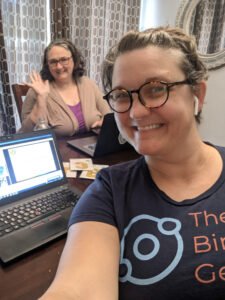
In this episode, Hillary and I dig into what prodromal labor actually is, why it happens, who’s more likely to experience it, and what’s worth saying versus what you should never say to a client who’s in the middle of it. The stopping and starting pattern is the hallmark, and it can go on for days or even weeks before active labor begins. That timeline matters for how you counsel your clients, how you frame rest, and how you manage your own availability as a doula.
We also talk through practical coping approaches that hold up in real practice: alternating rest with activity, not timing contractions obsessively, hydration, food, and the Spinning Babies work that can make a genuine difference when positioning is a factor.
Listen to This Episode
Episode Time Stamps
00:00 Discusses labor experiences, timed contractions, rest, and doula advice.
06:13 Progress involves more than dilation; cervical changes are key.
09:47 Empathy and validation are key to supporting someone during hardship, offering help while respecting concerns.
Key Takeaways
The term “false labor” causes real harm and should be retired from your vocabulary. When you call prodromal labor false, you signal to everyone in that person’s support system that what they’re experiencing doesn’t deserve attention or comfort. The contractions are physiologically real, the discomfort is real, and the cumulative exhaustion of hours or days of stopping-and-starting contractions has clinical and emotional consequences worth taking seriously.
Prodromal labor is defined by contractions that stop and start, typically occurring in the days or weeks before active labor begins. Unlike early labor that progresses steadily, prodromal patterns can pause entirely, sometimes for 24 hours or more, before resuming. Knowing this in advance changes how you counsel clients about rest, pacing, and when to call you, and it significantly reduces the panic that comes with an unexpected pause.
Cervical dilation is not the only measure of progress, and it shouldn’t be your only talking point with clients. Prodromal labor may not be changing dilation, but the cervix can also be softening, effacing, and moving from posterior to anterior position. Beyond the cervix, the baby is positioning, the body is rehearsing, and the person is doing real physiological work. Framing that for your clients before prodromal labor starts helps them stay grounded when a provider tells them “nothing is happening.”
How you word your coping suggestions matters as much as what you suggest. Telling someone to “just relax” or “just go back to bed” when they’ve been contracting all night lands as dismissal, not care. Removing the word “just” entirely is a good starting point. Validate that the experience is hard before you move into suggestions, and make sure your client knows you understand this is real before you pivot to practical guidance.
Preparation before labor begins is your best clinical tool for clients prone to prodromal patterns. Multiparity increases the likelihood of prodromal labor, and clients who know this ahead of time can plan for it rather than panic through it. In childbirth class and prenatal doula visits, build in conversation about what to do during a long early or prodromal phase: low-demand projects, rest strategies, food and hydration planning, and clear criteria for when to reach out to you or their provider.
Spinning Babies and positioning work can address some of the underlying causes of prodromal labor. When baby’s position is contributing to the start-stop pattern, targeted exercises can make a real difference. Refer clients to spinnabies.com (formerly spittingbabies.com) for daily pregnancy exercises, and make sure they know that some of the more involved techniques require hands-on help from a trained professional. Sending a client to do these alone is not the same as referring them to someone who can assist safely.
Mentioned in This Episode
Understanding Labor Patterns from Spinning Babies
Read the Full Transcript
Note: This transcript is auto-generated and may contain minor errors. Please refer to the audio for precise language, especially around clinical terms and data. And yes, sometimes “doula” gets interpreted… creatively.
Dr. Hillary Melchiors [00:00:18]:
Hey Hillary! Hey Robin!

Dr. Robin Elise Weiss [00:00:20]:
So super excited.

Dr. Hillary Melchiors [00:00:22]:
Same. So although I'm not pumped about our topic, I mean, I like the topic, but But yeah, today's topic is a bit of a downer. Well, it doesn't have to be, but it doesn't.

Dr. Robin Elise Weiss [00:00:36]:
But that's why we want to talk about it, because nobody wants to talk about it. And I don't think we talk about it enough, which is because people think it's a downer. I agree.

Dr. Hillary Melchiors [00:00:44]:
Or like, oh well, what's the big deal?

Dr. Robin Elise Weiss [00:00:47]:
So the other part, you're probably sitting here now on the edge of your seat, right, waiting to know what the heck are Robin and Hillary going to say next.

Dr. Hillary Melchiors [00:00:56]:
Prodromal labor.

Dr. Robin Elise Weiss [00:00:58]:
Ah, so the good news is we know what it is. What's prodromal labor? Tell everybody out there what prodromal labor is because it's a scary sounding name.

Dr. Hillary Melchiors [00:01:12]:
Oh, but you're right, labor. Okay, so some people call it false labor.

Dr. Robin Elise Weiss [00:01:15]:
Oh, I hate that word.

Dr. Hillary Melchiors [00:01:17]:
Uh, absolutely, because it completely takes the experience out of the entire equation because all that matters is whether you're dilated or not, right? Wrong. But the definition is— of prodromal labor is contractions that start and stop and are typically the prelude to active labor by days or even weeks.

Dr. Robin Elise Weiss [00:01:39]:
So can I tell you the problem that I have with the definition?

Dr. Hillary Melchiors [00:01:42]:
Please.

Dr. Robin Elise Weiss [00:01:43]:
Particularly when you're talking about it in terms of false labor, because one of the big things is that when people say they're in false labor those who are surrounding them take that as an excuse not to help them. Absolutely. Oh, this isn't real labor. It shouldn't hurt that much.

Dr. Hillary Melchiors [00:02:02]:
You're just faking it.

Dr. Robin Elise Weiss [00:02:03]:
You just want attention. What are some of the horrible things that you've heard people say?

Dr. Hillary Melchiors [00:02:09]:
I mean, all of the above.

Dr. Robin Elise Weiss [00:02:11]:
Yeah. And the thing is, when I'm working as a childbirth educator, I'm obviously trying to teach people like this is a real thing. And just because it is not transition doesn't mean it's not worthy of attention.

Dr. Hillary Melchiors [00:02:25]:
Absolutely. Of course, giving it too much attention though, right? True.

Dr. Robin Elise Weiss [00:02:31]:
But you can give it attention in a way that is, you know, I like to tell people, wait until labor demands your attention. Like work on ignoring it. I try and remind people, no matter how many apps you have, or it used to be pencil and paper, But even if you record every single contraction, it's not that the baby gets here faster. Nobody asks at the moment of crowning, like, turn over your data before we'll give you the baby. Okay.

Dr. Hillary Melchiors [00:02:59]:
Can I interject very quickly and say I diligently wrote down every contraction time with my first baby and I got to the office and I handed the paper to the midwife and I swear to you, she threw it over her shoulder and said, that's nice.

Dr. Robin Elise Weiss [00:03:17]:
I was the person who was chased by my husband. I have long labors and I, I felt like he was chasing me with a stopwatch. There were no apps. I am old enough that there were no apps. Oh, right. But I got chased with a stopwatch and I just felt like, uh, so I talk about alternating rest with activity and, you know, timing contractions just when they've changed and You know, labor hasn't stopped or gone away if you've gone to sleep. I've had a lot of clients as a doula who are like, I must not sleep, right?

Dr. Hillary Melchiors [00:03:48]:
I did something wrong. Every time I lay down, the contractions stop.

Dr. Robin Elise Weiss [00:03:52]:
Yeah.

Dr. Hillary Melchiors [00:03:53]:
So let's talk about signs of prodromal labor. What does it look like?

Dr. Robin Elise Weiss [00:03:58]:
So one of the big hallmarks is that the contractions stop and start, right? And that's annoying. Nobody wants contractions that stop.

Dr. Robin Elise Weiss [00:04:07]:
Right.

Dr. Hillary Melchiors [00:04:07]:
Uh, let's remind people that both of us have experienced this personally as well. That might influence our opinions here just a little bit.

Dr. Robin Elise Weiss [00:04:18]:
Um, so yeah, the stopping and starting can be really frustrating, particularly if they stop for quite a while, and that might even be 24 hours. Yep. And you know, hey, that was a good chance for you to practice all those things you learned in childbirth class.

Dr. Hillary Melchiors [00:04:33]:
Yes.

Dr. Robin Elise Weiss [00:04:34]:
Or as a doula, if I make a call to somebody's house because they were like, this is it. I would rather have lots of calls like that than a come now, the baby's coming, right?

Dr. Hillary Melchiors [00:04:44]:
I'm 8 centimeters.

Dr. Robin Elise Weiss [00:04:46]:
Yeah, I mean, I'll make it, but hopefully— but I mean, I will make the— I will do that if that's how labor starts. But it's always easier on everybody if we have some heads up there.

Dr. Hillary Melchiors [00:04:56]:
Oh, for sure.

Dr. Robin Elise Weiss [00:04:57]:
For sure.

Dr. Robin Elise Weiss [00:04:58]:
That can help you be more comfortable even if I don't come to your house. That's what I tell people.

Dr. Hillary Melchiors [00:05:03]:
Absolutely. And I think that Yeah, so those contractions that are like 5 to 10 minutes apart and are less than a minute long, right, they're not really getting closer together, right? Um, I think the longer, stronger, and closer together, but that can be really hard to judge, right? Because when you're in it, you're like, oh, here comes another one.

Dr. Robin Elise Weiss [00:05:26]:
Well, and let's also take into account that the more contractions you have the more mental and emotional wear there is, and that is going to influence how well you're coping, right? And if you're not coping as well with them 2 hours in, particularly at 2 AM— these are not contractions that seem to have any good decent sense of timing.

Dr. Hillary Melchiors [00:05:47]:
Of course not. If you've already taken the next day off of work and then you're like, dang it, then why don't you stop? Yeah, get away from me with your stopwatch. Yes.

Dr. Robin Elise Weiss [00:05:57]:
Well, and I think one of the things here is that It's not changing your cervix, and that is the heart-wrenching part, right? That's what people focus on, and we know that there are more ways to progress than that dang cervix, but right, a lot of providers, that's what they're focused on.

Dr. Hillary Melchiors [00:06:13]:
Well, yes, and I feel like we of course know that, you know, there are more ways to progress than just dilation as well, right? So, um, even if you're just talking about your cervix, so, you know But not changing is, is the real key there. Not changing your cervix, so it's not making it any softer, it's not making any shorter, it's not moving from pointing towards your back towards your front, all that fun stuff, right?

Dr. Robin Elise Weiss [00:06:41]:
So that leads us to why does this happen? Why? Why me?

Dr. Hillary Melchiors [00:06:49]:
Well, I So you're more at risk for prodromal labor if it's not your first pregnancy. Why is that, Robin? Do you know?

Dr. Robin Elise Weiss [00:06:59]:
Torture? Birth control?

Dr. Hillary Melchiors [00:07:02]:
Birth control didn't work in your case.

Dr. Robin Elise Weiss [00:07:04]:
Wow.

Dr. Hillary Melchiors [00:07:06]:
I'm not calling you out. You have amazing children. But yeah, no, so if it's not your first pregnancy, I feel like it's almost your uterus's way to be like, hey, guess what's coming?

Dr. Robin Elise Weiss [00:07:16]:
This is true.

Dr. Hillary Melchiors [00:07:18]:
Right. Um, so sometimes you get it because you're dehydrated or you need to relax. That's always fun when you say— when you're already annoyed from having contractions for hours that aren't getting better, stronger, longer, and closer together, and you're like, just relax, drink more water, put your feet up. Did it make you want to punch people when they said that to you?

Dr. Robin Elise Weiss [00:07:43]:
Yes. Particularly when I felt like I had more experience than they did, right?

Dr. Hillary Melchiors [00:07:48]:
So annoyed with people telling me, oh, just put your feet up. And I cannot tell you how many hours I sat on that ball bouncing up and down.

Dr. Robin Elise Weiss [00:07:56]:
I hate when people, um, when people just say, just go to bed, or just walk around the block. Not that those are bad things to say, not at all. But you have to be very careful how you say it. Absolutely. You want to make sure that people understand that you know what's going on, that you understand that they're not making this up or they're not crazy. I just like—

Dr. Hillary Melchiors [00:08:23]:
I take the word just out of it. That's probably a good— just a good tip. Take the word just. Oh, it's just fake labor. It's just prodromal labor. What's the problem?

Dr. Robin Elise Weiss [00:08:36]:
Well, and I think this is also where we need to give a shout out to spittingbabies.com.

Dr. Hillary Melchiors [00:08:42]:
Yes.

Dr. Robin Elise Weiss [00:08:44]:
So yeah, they have your daily essentials, so exercises that you can be doing the whole pregnancy. But if you are late to the game, it's never too late to get started.

Dr. Hillary Melchiors [00:08:54]:
Absolutely.

Dr. Robin Elise Weiss [00:08:55]:
And then see if you have a childbirth educator or doula in your area, or a midwife or an obstetrician, anybody who can also help you with the spinning babies.

Dr. Hillary Melchiors [00:09:03]:
Oh Lord, because some of those you do not want to be doing by yourself.

Dr. Robin Elise Weiss [00:09:06]:
Well, yeah, it would be physically impossible.

Dr. Hillary Melchiors [00:09:10]:
Or just dangerous, actually.

Dr. Robin Elise Weiss [00:09:13]:
Well, and I think one of the hardest parts is that sometimes it's just not time.

Dr. Hillary Melchiors [00:09:20]:
Yeah, I know, because you so want it to be time.

Dr. Robin Elise Weiss [00:09:25]:
You're ready, you're so ready, and you're annoyed, and you're not feeling comfortable, and you just want it over.

Dr. Hillary Melchiors [00:09:32]:
Yes, exactly. You're like, let's get this show on the road, come on body.

Dr. Robin Elise Weiss [00:09:38]:
Let's have the baby. So what is the right thing to say or do for someone who's experiencing prodromal labor?

Dr. Hillary Melchiors [00:09:47]:
Well, I think a good reaction to anyone who is, you know, having a hard time is just empathy in general. I'm really sorry that you're going through this right now, right? Um, I never try to say, oh, it's just blah blah blah, clearly. Oh well, it'll happen when it happens. I'd never dismiss someone's concerns when it's real labor, right? And I think as a doula, sometimes that can be a fine line, right? I want to, I want to give, uh, help, and I want to help people know when it's time to actually go to the hospital. But at the same time, I want to say, okay, well, I validate your experience, and I see that you're having a hard time. How can I help you? Here are some suggestions, right? So sometimes I'll suggest That's a couple things. What do you like to suggest, Robin?

Dr. Robin Elise Weiss [00:10:41]:
So again, alternate periods with rest with activity. Don't pay attention too soon. Only time contractions for a little bit and then don't time them again until they've changed. Right. Never skip a meal.

Dr. Hillary Melchiors [00:10:58]:
That's just good life advice.

Dr. Robin Elise Weiss [00:11:02]:
So in childbirth class, as well as for my doula clients, I spend a lot of time prepping for how do you feel at the end of pregnancy? You know, how do you live your life? Like, you, you know, we say things like, oh, you can't control whether or not you're sick, and partially that's true. But I'm gonna give you a reminder to wash your hands, maybe wash your doorknobs, not be around sick people. But I'm also going to remind you that you do have control over, to some extent, when you last had dinner.

Dr. Hillary Melchiors [00:11:31]:
Absolutely.

Dr. Robin Elise Weiss [00:11:32]:
You know, so even if you're grazing all day for heartburn or other things that are making you uncomfortable in pregnancy, making sure that you're well hydrated, that you're well fed, that you're sleeping when you can sleep, even if that is like crazy awkward times or in 15-minute time slots. Do what you can to be your best self, whatever that looks like.

Dr. Hillary Melchiors [00:11:52]:
Absolutely. Um, frankly, the warm bath. Oh yes, take a warm bath with 2 cups of Epsom salt in it. Do you do this?

Dr. Robin Elise Weiss [00:12:01]:
I don't do Epsom salt. Okay, but I, I'm a bath bomb kind of—

Dr. Hillary Melchiors [00:12:06]:
you're a bath bomb kind of person? Well, but I've been told that Epsom salt can really help relax your mussels.

Dr. Robin Elise Weiss [00:12:12]:
And do you have any research to back that up? You know what, I'll look.

Dr. Hillary Melchiors [00:12:18]:
If, if I can find it, we'll put it in the show notes. How's that?

Dr. Robin Elise Weiss [00:12:21]:
If not, we found it. We found where she deviates. Maybe I just like a salty bath, and that's fine. Okay, it doesn't always have to, but we just have to like acknowledge where we have it and where we don't.

Dr. Hillary Melchiors [00:12:32]:
Hey, so let's make sure we put these into a lovely little printable.

Dr. Robin Elise Weiss [00:12:37]:
Oh, that sounds great. So you can find all of this at thebirthgeeks.com/24. So this is episode 24, and we will have a free handout for you to use with your clients to give away at your pleasure. So that will be in the show notes, and you can download that and use it. And don't be afraid to talk about this. It's not a popular topic, but The thing is, if we take the stigma away from what this sounds like and what this looks like, then people will be more inclined to treat it with the respect it deserves.

Dr. Hillary Melchiors [00:13:14]:
Absolutely. Take the mystery out of it. Let's talk about it.

Dr. Robin Elise Weiss [00:13:19]:
Prodromal labor doesn't have to be something— it doesn't have to be a bad word.

Dr. Hillary Melchiors [00:13:24]:
Oh, it might not be a comfortable word, but we should definitely make it not such a bad word.

Dr. Robin Elise Weiss [00:13:30]:
Well, and I think if you plan for it and you have— here's the project I'm going to do.

Dr. Hillary Melchiors [00:13:37]:
Exactly.

Dr. Robin Elise Weiss [00:13:38]:
Whether it be early labor or whether it be prodromal labor, you know, I'm gonna write a letter to the baby, I'm gonna bake those cookies for the nurses, right?

Dr. Hillary Melchiors [00:13:46]:
I'm gonna knit some cute little hats for the baby.

Dr. Robin Elise Weiss [00:13:49]:
That's my job as a doula. That's what I do in early labor, is I crochet or knit hats.

Dr. Hillary Melchiors [00:13:53]:
Nice.

Dr. Robin Elise Weiss [00:13:54]:
You taught me how to do the knitting on 4-point Needles. I try.

Dr. Hillary Melchiors [00:13:58]:
Double points are fun.

Dr. Robin Elise Weiss [00:13:59]:
I suck at it, but I still do it and the babies wear them.

Dr. Robin Elise Weiss [00:14:03]:
Good. Nice.

Dr. Robin Elise Weiss [00:14:06]:
So, well, that's it for our show today on prodromal labor. We hope that you enjoyed it. Please be sure to check us out at thebirthgeeks.com where you will find all of those things in the show notes, including your free handout to use at will with your clients on prodromal labor. And again, those are going to be 5 signs of prodromal labor, 4 reasons that you might be having prodromal labor and 3 ways to cope with it.

Dr. Hillary Melchiors [00:14:30]:
And don't forget to rate, review, and subscribe wherever you listen to this podcast.

Dr. Robin Elise Weiss [00:14:35]:
Have a great day.

Dr. Hillary Melchiors [00:14:36]:
Thanks.

Dr. Robin Elise Weiss [00:14:44]:
Hey there, birth geeks. So this week Robin and I spoke all about a really annoying thing that our clients deal with. Prodromal labor, right? So when I was trying to come up with something fun to talk about for the research roundup, I thought, "Maybe let's not go fun. Maybe let's stick with annoying." This is actually way more than annoying. I wanted to talk about hyperemesis gravidarum. So there's been some really interesting research coming out about hyperemesis gravidarum recently. I've read really cool stuff about genetic screening for hyperemesis gravidarum, right? So there They actually found two really interesting genes that they can look for in people's blood. Really cool stuff.

Dr. Robin Elise Weiss [00:15:30]:
I got to read part of that one in German, so that always makes me happy because, you know, I'm a geek like that. Then I read another really interesting study that was about the use of cannabis for hyperemesis gravidarum. So I don't— I didn't actually really like that article. That one just came out at the end of January 2020. Mostly because it only had 4 people and they kind of glossed over the effects of cannabis on the baby, right, the fetus. So I think that's kind of important. It is interesting research that came out. It actually came out of Israel.

Dr. Robin Elise Weiss [00:16:09]:
It was a prospective study, which we are not really, you know, we can't really see that here in the United States. Um, at least not that much yet. But what instead— what I wanted to focus on was something else that I really learned about recently. And that— of course I'm a year behind because that's how it goes— but, um, it's actually by the HER Foundation. So the HER Foundation in conjunction with UCLA has put out almost exactly a year ago actually the HG Care app. So it is available for you to download on iTunes if you are interested. I get no kickbacks from this, but what I think is really fascinating is they're using this app to help people understand how their, their symptoms work, help them figure out their triggers, and help them find out which treatments they're using that are working. And they're using it for all these really amazing assessments, and then you, you basically use this app on a daily basis to figure it out, figure out what's going on with you and what's helping and what's not.

Dr. Robin Elise Weiss [00:17:16]:
And then you can share all of this data with your family and healthcare professionals. So it can help you do things like, um, can help you do things like make sure that you're controlling your triggers, right? So anything that's going to trigger you to vomit or be sick, sorry, however you'd prefer to rephrase that. Whatever's going to trigger you, it can help you figure out what those things are. It also, um, I believe there's a research study that's going along with this app, so it's really interesting stuff.

Dr. Robin Elise Weiss [00:17:50]:
We—

Dr. Robin Elise Weiss [00:17:51]:
HG is no joke. As someone who suffered, I'm not sure if it would be diagnosed or not, but I definitely suffered from from a lot— excessive vomiting with my first pregnancy. I can tell you it is no joke and there are serious, serious consequences for people who suffer from HG as well as the babies that they are carrying. So just go check it out if you are interested. I will put the link in the show notes, but this is the HG Care app for you and it's only available on Apple right now. So hopefully for us fun Android users out there. They will have an Android version soon enough for us. So thanks so much, Birth Geeks!

Dr. Hillary Melchiors [00:18:39]:
Hey Birth Geeks! We love to be social, so be sure to use our hashtag in all your posts, which is #BirthGeeksUnite. The Birth Geeks.

Dr. Robin Elise Weiss [00:18:50]:
Upgrading the conversation and renewing your professional mock-up.

Dr. Robin Elise Weiss [00:18:56]:
See.